cetaceans

A mother gray whale and calf spy-hopping.

What gray whales are telling us about ecosystem change in the Pacific Arctic

Gray whales in the eastern North Pacific have been shrinking in number for the past six years — and the decline seems to be getting worse. This is surprising because gray whales had made a big comeback after being hunted almost to extinction. But now, warming oceans are changing their Arctic feeding areas. Less sea ice and shifts in ocean […]

Dr. Sue Moore and Dr. Jennifer Tennessen attend One Ocean Week Seattle

Dr. Sue Moore and Dr. Jennifer Tennessen attended One Ocean Week Seattle, a region-wide, international gathering of ocean leaders, innovators, researchers, startups, policymakers, artists, educators, and communities to accelerate solutions for a sustainable, inclusive maritime future. Dr. Moore was a panelist on the “Coast to Coast Collaboration in Research” session, organized by Arctic Frontiers, Abroad and held onboard the Statsraad

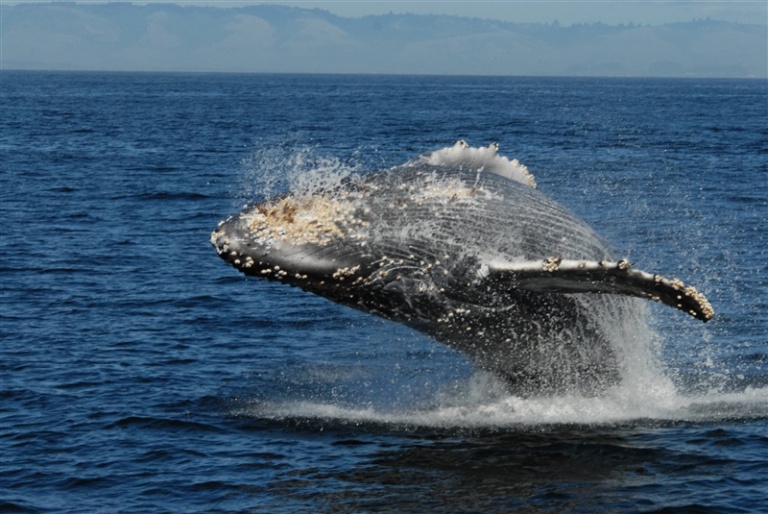
A humpback whale breaching in a graceful arc.

Identifying climate refugia and bright spots for highly mobile species

From the abstract: “We present a framework to facilitate climate change adaptation planning by identifying where highly migratory species habitats will persist (climate refugia), emerge (bright spots), disappear (dark spots), or remain unsuitable based on model analysis by 2100. When applied to eight species in the California Current System, we found that, on average, 37% of habitats are expected to

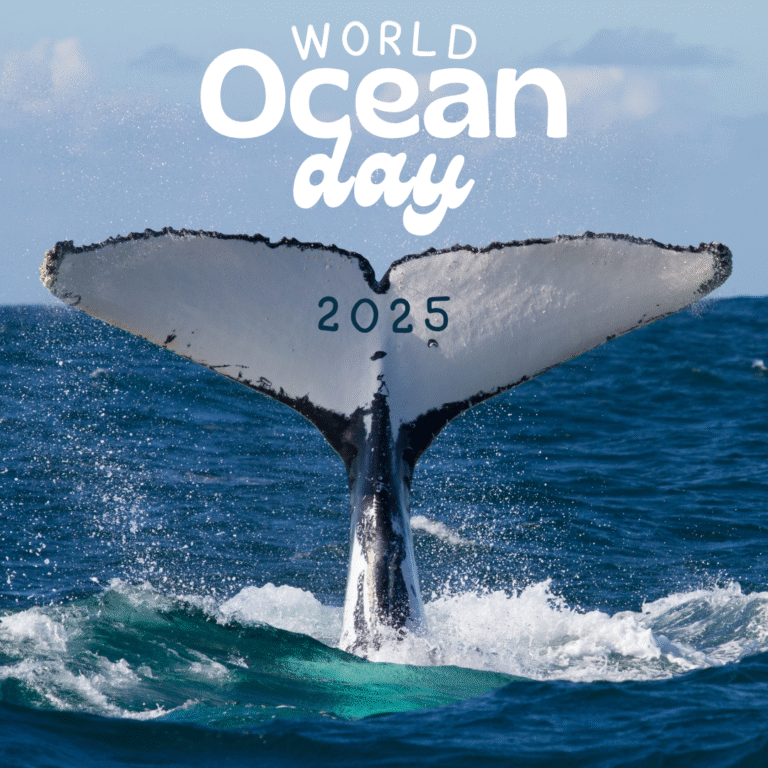
World Ocean Day 2025

World Ocean Day 2025 is year two in a multi-year action theme: Catalyzing Action for Our Ocean & Climate. Many students from Dee’s Video Storytelling class have been inspired by the ocean and featured them in their videos. Favorite ocean-themed videos 🌊Our global mean sea level has been rising as far back as the 19th century. Sea level rise impacts

Humpback whale breaching

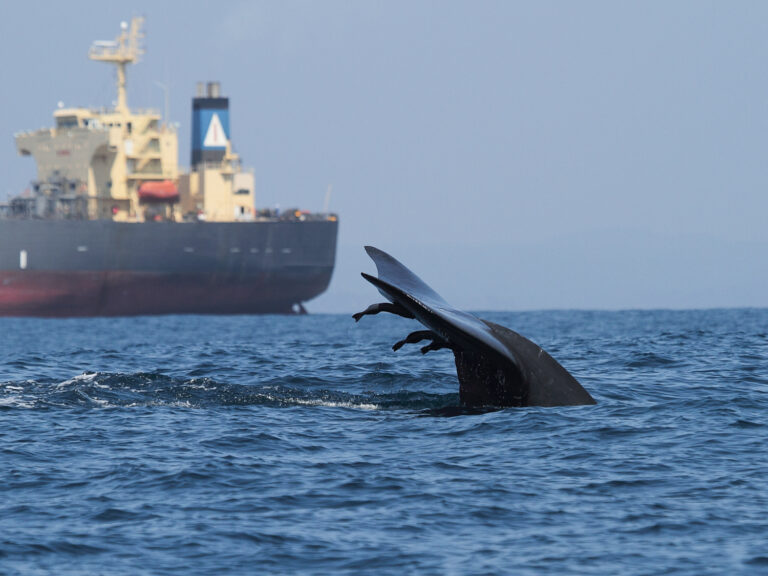
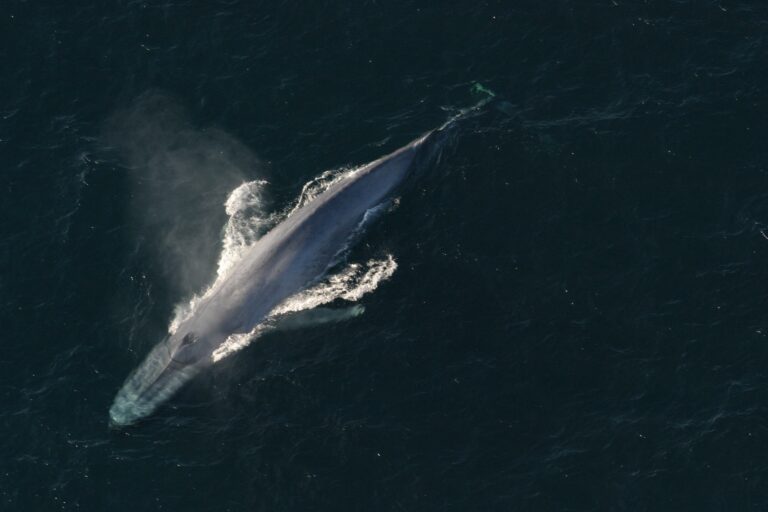
New maps show high-risk zones for whale-ship collisions

Article originally published under the title “New maps show high-risk zones for whale-ship collisions − vessel speed limits and rerouting can reduce the toll” by The Conversation and republished through the Creative Commons — Attribution/No Derivatives license. Written by Dr. Anna Nisi. Imagine you are a blue whale swimming up the California coast, as you do every spring. You are searching

Ship collision risk threatens whales across the world’s oceans

Excerpt from UW News: “Thousands of whales are injured or killed each year after being struck by ships, particularly the large container vessels that ferry 80% of the world’s traded goods across the oceans. Collisions are the leading cause of death worldwide for large whale species. Yet global data on ship strikes of whales are hard to come by —

Males miss and females forgo

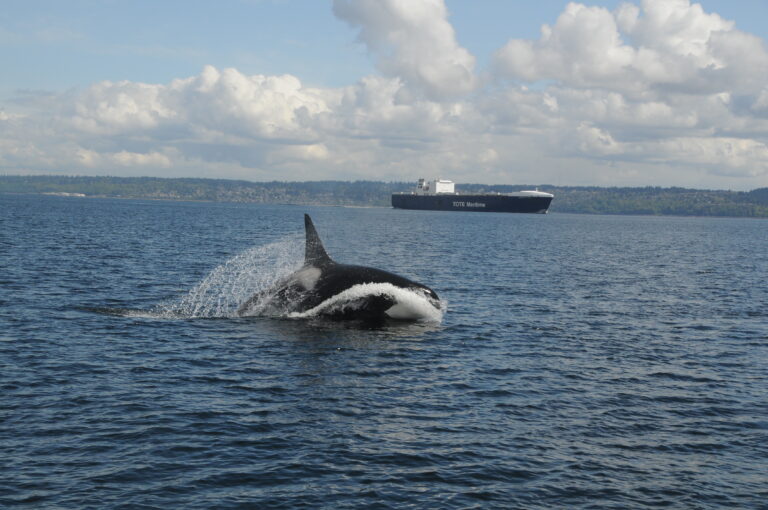
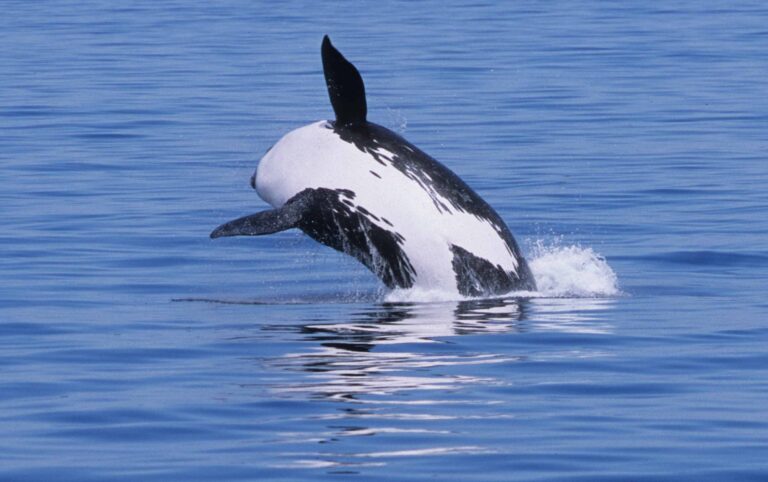
Summary adapted from social media post by Anna Testorf: One of our recent studies illustrates how noise from large ships and other vessels decreases overall foraging success of fish-eating killer whales through a process known as auditory masking. Knowing how vessel noise affects killer whales can inform actions to mitigate noise and promote health and survival of these vulnerable populations

Long-distance communication can enable collective migration in a dynamic seascape

“Social information is predicted to enhance the quality of animals’ migratory decisions in dynamic ecosystems, but the relative benefits of social information in the long-range movements of marine megafauna are unknown. In particular, whether and how migrants use nonlocal information gained through social communication at the large spatial scale of oceanic ecosystems remains unclear. […]” Authors: Stephanie Dodson, William K.

Ecosystem Sentinels as Early-Warning Indicators in the Anthropocene

Authors: Elliott L. Hazen, Matthew S. Savoca T.J. Clark-Wolf, Max Czapanskiy, Peter M. Rabinowitz, and Briana AbrahmsJournal: Annual Review of Environment and ResourcesDOI: https://doi.org/10.1146/annurev-environ-111522-102317 “Sentinel species, from birds to invertebrates, have been used to provide insights into ecosystem function, as leading indicators of risk to human health and as harbingers of future change, with implications for ecosystem structure and function.

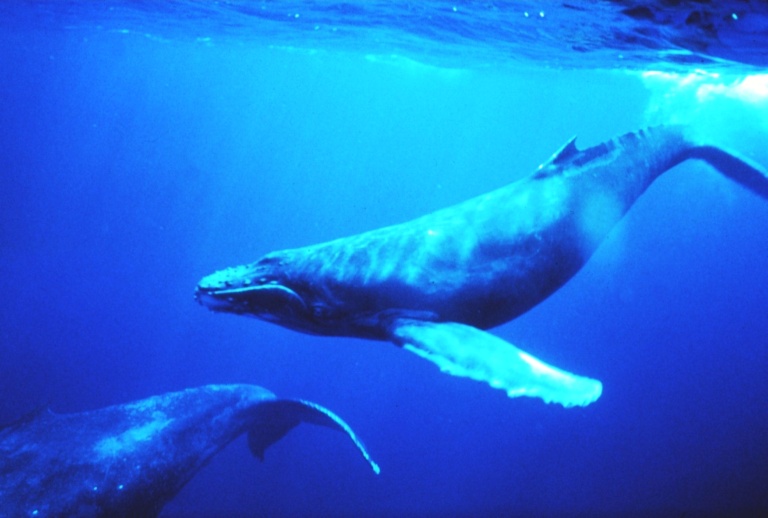
Humpback whale in singing position. Photo credit NOAA / Dr. Louis M. Herman

Using the power of models to protect whales from possible ship-strikes

Written by Dr. Anna Nisi We have been building cutting-edge models of species distributions for four great whale species – blue, fin, sperm, and humpback whales. One key threat to the great whales is collisions with shipping vessels, and identifying places where ship-strike risk is high is essential for informing mitigation actions like vessel slow-downs. Our next step is to

Humpback whale breaching

Humpback whale sightings in northern Arctic Alaska

Excerpt: “Here we bring together sighting data from aerial and shipboard surveys in the southern and central Chukchi Sea, as well as recent sightings of humpback whales near Utqiagvik, Alaska to document these observations more fully. Authors: Kathleen M. Stafford, John C. George, Qaiyaan Harcharek, Sue E. MooreJournal: Marine Mammal ScienceDOI: https://doi.org/10.1111/mms.13051 Photo credit: Dr. Mridula Srinivasan NOAA/NMFS/OST/AMD [Humpback whale breaching. ]

Divergent foraging strategies between populations of sympatric matrilineal killer whales

Authors: Jennifer B Tennessen, Marla M Holt, Brianna M Wright, M Bradley Hanson, Candice K Emmons, Deborah A Giles, Jeffrey T Hogan, Sheila J Thornton, Volker B DeeckeJournal: Behavioral EcologyDOI: 10.1093/beheco/arad002Coverage: The Seattle Times, Skagit Valley Herald, Seattle King 5 News, KUOW Public Radio, Oregon Public Broadcasting’s “Think Out Loud”, Victoria Times Colonist, North Shore News

Gray whales number about 27,000 along the West Coast of North America. Photo by

Changes in gray whale phenology and distribution related to prey variability and ocean biophysics in the northern Bering and eastern Chukchi seas

From the abstract: “We discuss potential impacts of observed and inferred prey shifts on gray whale nutrition in the context of an ongoing unusual gray whale mortality event. To conclude, we use the conceptual Arctic Marine Pulses (AMP) model to frame hypotheses that may guide future research on whales in the Pacific Arctic marine ecosystem.” Authors: Sue E. Moore, Janet

Scroll to Top