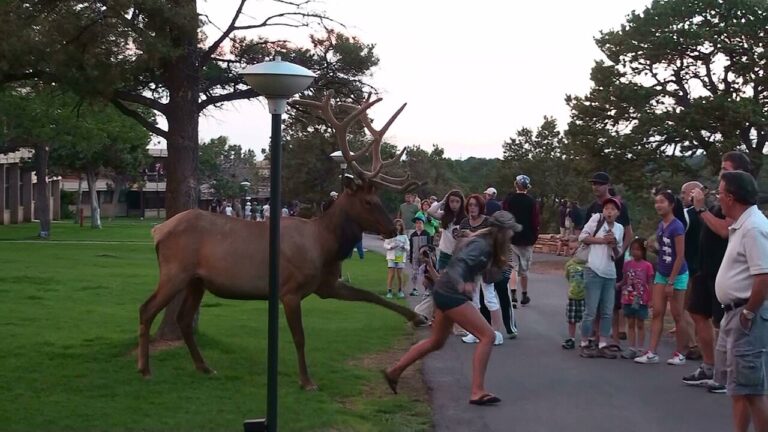
human-wildlife conflict

Abrahms Lab, News

Dr. Briana Abrahms Speaks at International Parliamentary Roundtable on Human-Wildlife Coexistence

Dr. Briana Abrahms had the privilege to give a keynote speech at the International Parliamentary Roundtable on Human-Wildlife Coexistence (HWC) in Gaborone, Botswana on January 19, 2026. The roundtable included parliamentarians from Botswana, Denmark, Finland, Germany, Greece, Kenya, Malawi, Namibia, Romania, Sri Lanka, Sweden, and Zambia. Her presentation provided a global overview of how and why climate change is increasing […]
, ,
Publications

Intraguild competition mediates human avoidance in an endangered African large carnivore

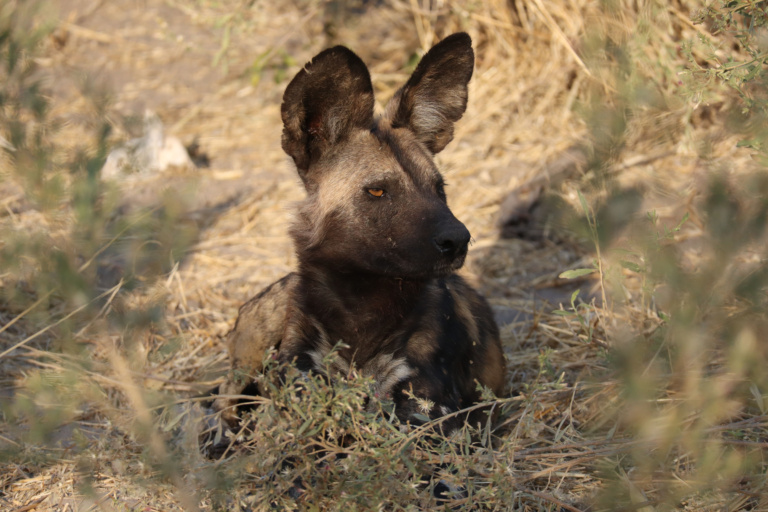
Excerpt from the abstract: Here, we examined the spatial behaviour of two sympatric large carnivore species exhibiting intense intraguild competition—lions and African wild dogs—to investigate whether intraguild competition mediates large carnivore responses to human disturbance in support of the anthropogenic refuge hypothesis. We found that lions consistently avoided human-dominated areas. Similarly, we found that wild dogs generally avoided human-dominated areas,

, , , , ,
Publications

Males miss and females forgo

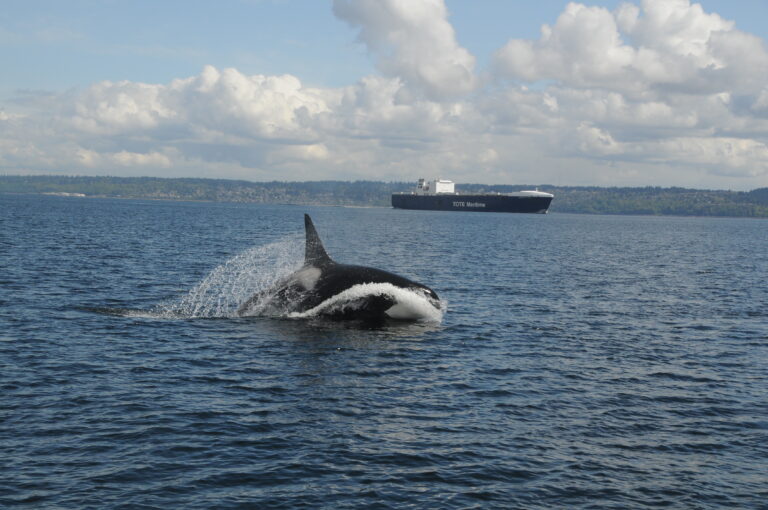
Summary adapted from social media post by Anna Testorf: One of our recent studies illustrates how noise from large ships and other vessels decreases overall foraging success of fish-eating killer whales through a process known as auditory masking. Knowing how vessel noise affects killer whales can inform actions to mitigate noise and promote health and survival of these vulnerable populations

, , ,
Publications

Global expansion of human-wildlife overlap in the 21st century

“We show that the potential spatial overlap of global human populations and 22,374 terrestrial vertebrate species will increase across ~56.6% and decrease across only ~11.8% of the Earth’s terrestrial surface by 2070 […] The strong spatial heterogeneity of future human-wildlife overlap found in our study makes it clear that local context is imperative to consider, and more targeted area-based land-use

,
Two right whalesPublications

A review of climate change effects on marine mammals in US waters

Scientists have found clear evidence that climate change is affecting marine mammals in U.S. waters, although few studies show direct impacts on population size or survival rates. Many of these effects were expected, but some sudden and unexpected changes have also occurred. Climate change often has stronger impacts when combined with natural ecological relationships, like predator–prey interactions, or with human

, , , ,
Scroll to Top