Updates from the Field

Filter posts by category

Field updates: Botswana, August-October 2025

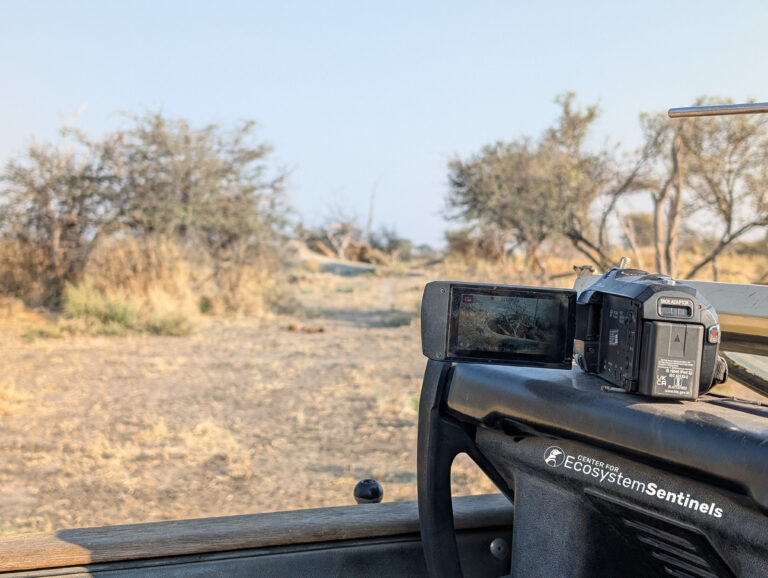
Written by Dr. Kasim Rafiq and graduate student Marie-Pier Poulin of the Abrahms LabAll research and photographs are done in compliance with IACUC-approved protocols, and have been permitted through the appropriate permits. Over the past few months, we have been busy collecting data on African carnivores at Dog Camp, the Botswana-based bush camp of our long-term collaborators Wild Entrust’s Botswana […]

Two people on a blow-up boat look at a Galapagos penguin that is standing on the edge of the boat.

Field Updates: Galápagos, Summer 2025

Dr. Dee Boersma, Dr. Sue Moore, and Dr. Caroline Cappello were in the Galápagos from July 25 – August 3 to survey the penguins on the islands. They were able to measure 36 of them—16 more than last year! Measuring penguins is an essential part of our project, which is maintaining continuity with our decades-long dataset on the species. Dr. Boersma began studying

Field updates: Botswana, June – July 2025

Post written by Marie-Pier Poulin Graduate student Marie-Pier Poulin scans for animal tracking collars in the Okavango Delta. Photo credit: Leigh West In mid-June, PhD candidate Leigh West, postdoctoral researcher Dr. Kasim Rafiq, and graduate student Marie-Pier Poulin arrived at Dog Camp, the Botswana-based bush camp of our long-term collaborators Wild Entrust’s Botswana Predator Conservation. Over the past month, we

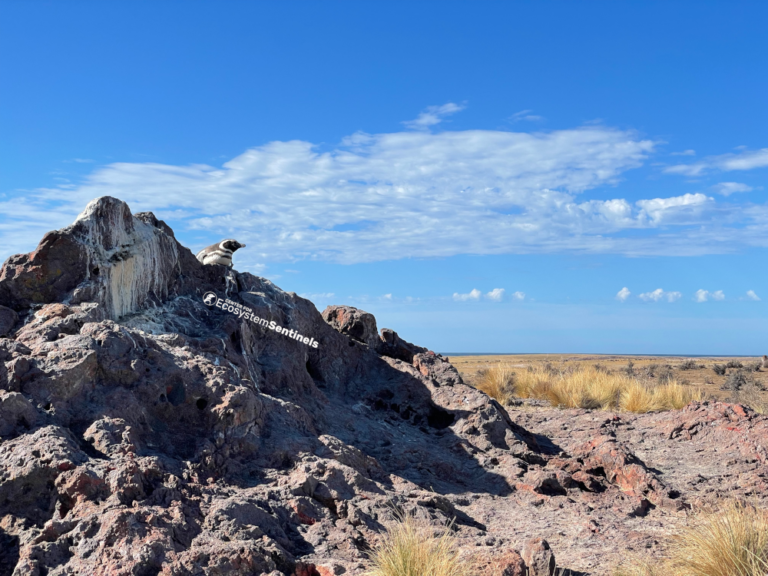
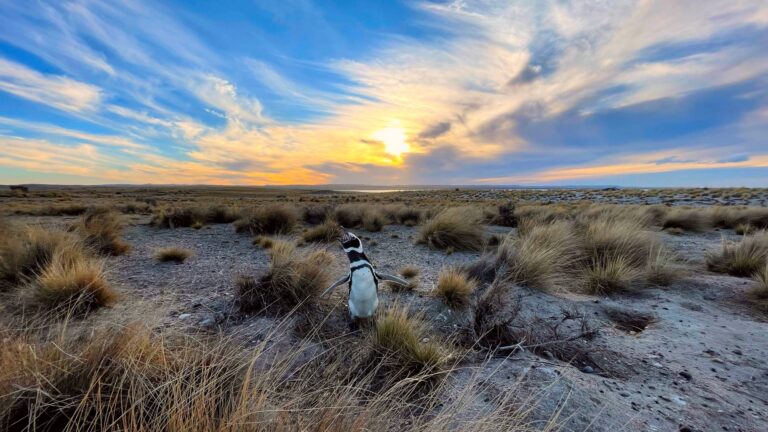
A penguin stands on a large rock with a blue sky as a backdrop.

Field updates: Argentina, March 2025

Written by Dr. Eric Wagner Thanks once again to generous support from Zoo Augsburg, research scientist Dr. Eric Wagner and computer specialist Pearl Wellington traveled to Punta Tombo in early March for a couple of weeks to mark the end of the breeding season. Eric and Pearl went to deploy twenty geolocating time-depth recorder (GLD) tags to female and male

Field update: Argentina, December 2024 – January 2025

This field season is the first time we’ve been at Punta Tombo, Argentina persistently from October to March since before the pandemic! We’ve seen chicks hatch and watched them grow into chubby fledglings. Unfortunately many died in December with their bellies full; we suspect it was due to toxic algae, which could also be the cause of the 71 southern

Field Updates: Botswana, summer 2024

Written by Dr. Kasim Rafiq In June 2024, postdoctoral researcher Dr. Kasim Rafiq and PhD candidate Leigh West from Dr. Briana Abrahms‘ lab returned to Wild Dog Camp in the Okavango Delta and were joined by Briana’s new PhD student Marie-Pier Poulin. The team successfully deployed six new tracking collars on African wild dogs, including in two brand new packs,

Field Updates: Galápagos Islands, summer 2024

In July 2024, Dr. Dee Boersma and Dr. Caroline Cappello traveled to the Galápagos Islands for a penguin expedition unlike any they’d experienced before. Since 2010, CES has collaborated with Galápagos National Park and conservationist Godfrey Merlen to visit penguin breeding areas and conduct research. After Godfrey’s passing in 2023, CES—with heavy hearts but optimism for the future—sought a new

Field updates: Argentina, April 2024

Thanks to the generous support of Zoo Augsburg in Germany, Dr. Eric Wagner and Katie Holt were able to return to Punta Tombo for a couple of weeks in April. There, they put twenty satellite tags on penguins—ten females and ten males—that were about to start their post-breeding migration. As of today 18 satellite tags are still transmitting to our

Field Updates: Tombo Jan-Feb 2024

We continued our Punta Tombo field season this winter with graduate student Erik Johansson, former undergrad lab member Chloe Rabinowitz, and program coordinator Kalyna Durbak staying on site from January 12 through February 21. Our goal for this trip was to attach GTA* and GPS tags on adult penguins who were actively feeding chicks in order to log their foraging

Field updates: Argentina, September 2023

Written by Dr. Dee Boersma The ongoing pinniped (seals and walruses) die-off on Peninsula Valdés is catastrophic. Our contacts in Argentina–two local veterinarians (Marci Uhart and Ralph Vanstreels), and Claudia Campagna of WCS–tell us that hundreds and potentially thousands of sea lions and elephant seals have died. Avian flu (more widely known as bird flu) has devastated seabird populations throughout

Field updates: Botswana, summer 2023

Written by Leigh West African wild dogs are very social animals, living in groups called packs. Wild dog packs have a dominant male and female, and it is this dominant pair that breeds each year to produce litters of pups. Packs of wild dogs are very cooperative, hunting and raising their young together. Two of the wild dogs that the

Scroll to Top