Dr. Kasim Rafiq

Leveraging machine learning and accelerometry to classify animal behaviors with uncertainty

Animal-worn sensors, especially accelerometers, are increasingly used with machine-learning models to identify animal behaviors. These tools often struggle with uneven training data, uncertain predictions, and noisy results. To address these issues, Dr. Rafiq and Dr. Abrahms, with their collaborators, developed an open-source method that combines machine learning and statistical techniques to improve behavior classification and to provide “prediction sets,” which […]

Field updates: Botswana, August-October 2025

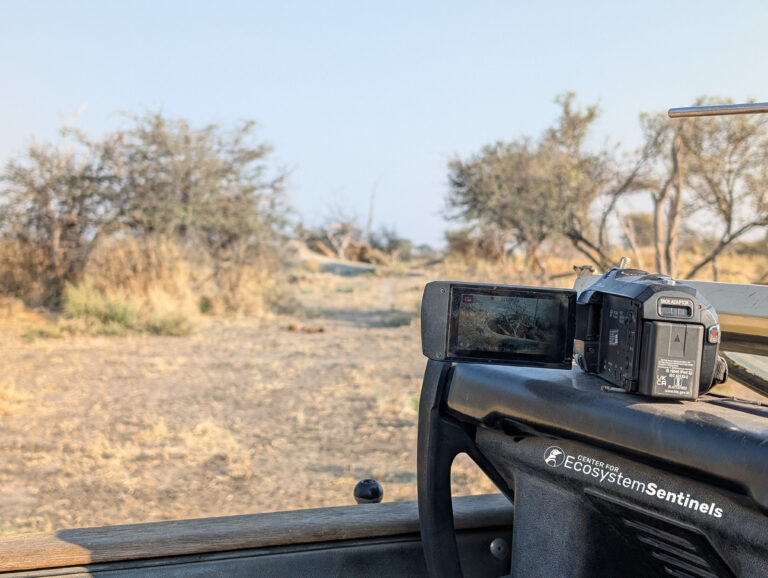
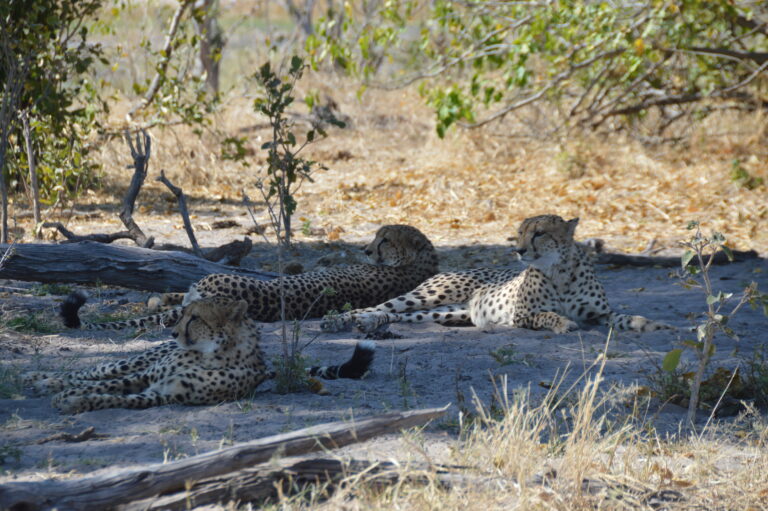
Written by Dr. Kasim Rafiq and graduate student Marie-Pier Poulin of the Abrahms LabAll research and photographs are done in compliance with IACUC-approved protocols, and have been permitted through the appropriate permits. Over the past few months, we have been busy collecting data on African carnivores at Dog Camp, the Botswana-based bush camp of our long-term collaborators Wild Entrust’s Botswana

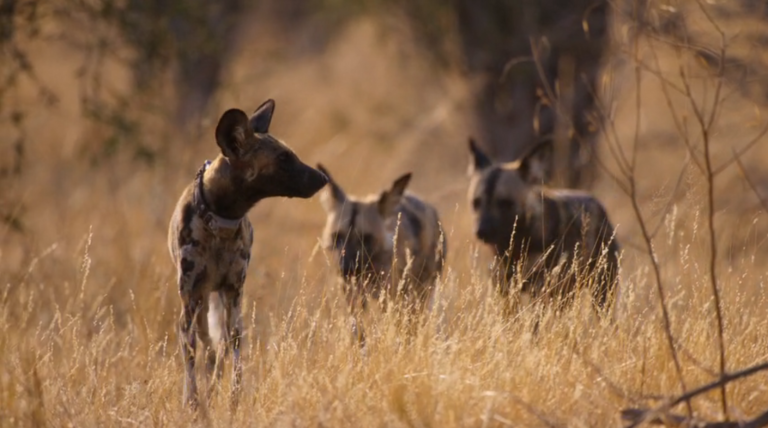
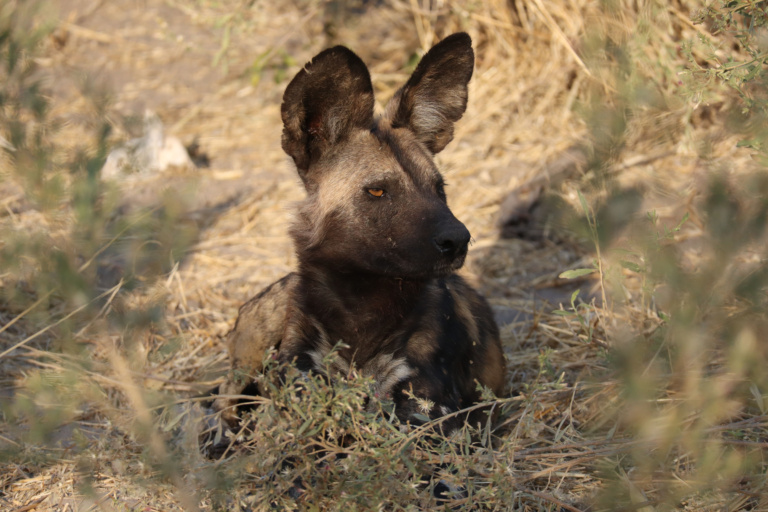
An African wild dog looks towards the camera through green leaves.

Wild canids and felids differ in their reliance on reused travel routeways

Dr. Briana Abrahms and Dr. Kasim Rafiq, along with many collaborators, published this study in PNAS earlier this fall. Animals move through their environments in many different ways, and these movement patterns affect things like hunting, finding mates, and spreading diseases. This study looked at GPS data from over 1,200 wild carnivores—16 canid (dog-like) and 18 felid (cat-like) species from

Field updates: Botswana, June – July 2025

Post written by Marie-Pier Poulin Graduate student Marie-Pier Poulin scans for animal tracking collars in the Okavango Delta. Photo credit: Leigh West In mid-June, PhD candidate Leigh West, postdoctoral researcher Dr. Kasim Rafiq, and graduate student Marie-Pier Poulin arrived at Dog Camp, the Botswana-based bush camp of our long-term collaborators Wild Entrust’s Botswana Predator Conservation. Over the past month, we

Perceived and observed biases within scientific communities

Full title: Perceived and observed biases within scientific communities: a case study in movement ecology From the abstract: “Although the survey indicated most conference participants as bias-aware, conversations only covered a subset of biases. We discuss potential causes of bias (parachute-science, fieldwork accessibility), solutions and the need to evaluate mitigatory action effectiveness. Undertaking data-driven analysis of bias within sub-disciplines can

Intraguild competition mediates human avoidance in an endangered African large carnivore

Excerpt from the abstract: Here, we examined the spatial behaviour of two sympatric large carnivore species exhibiting intense intraguild competition—lions and African wild dogs—to investigate whether intraguild competition mediates large carnivore responses to human disturbance in support of the anthropogenic refuge hypothesis. We found that lions consistently avoided human-dominated areas. Similarly, we found that wild dogs generally avoided human-dominated areas,

Generative AI as a tool to accelerate the field of ecology

This paper summarizes the potential generative artificial intelligence (AI) has to aid ecological research. With access to more and more data, like genetic information and animal movement data, generative AI could augment data-scarce datasets, extend observations of ecological patterns, and increase the accessibility of ecological data. The paper also covers the challenges to using generative AI such as privacy concerns,

Removing institutional barriers to long-term fieldwork is critical for advancing ecology

Abstract: Long-term fieldwork is essential for ecology and conservation, but is hindered by institutional barriers, such as the publish-or-perish culture of academia, and funding limitations. Here, we discuss these challenges and propose strategies to overcome them, such as broadening evaluation metrics and supporting inclusivity, to advance scientific insight and societal equity. Authors: Kasim Rafiq, Neil R. Jordan, Weldon McNutt, John

Droughts reshape apex predator space use and intraguild overlap

From the Abstract:Droughts are increasing in frequency and severity globally due to climate change, leading to changes in resource availability that may have cascading effects on animal ecology. Although several studies have demonstrated the ecological impacts of drought, the behavioural responses of individuals that scale up to these broader-scale effects are not well known, particularly among animals in top trophic

World African Wild Dog Day

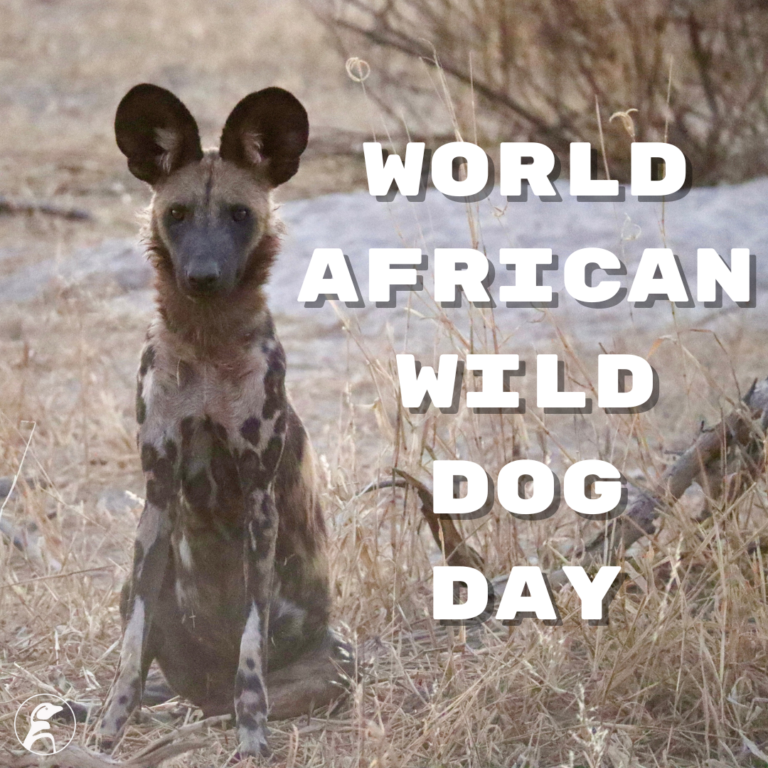
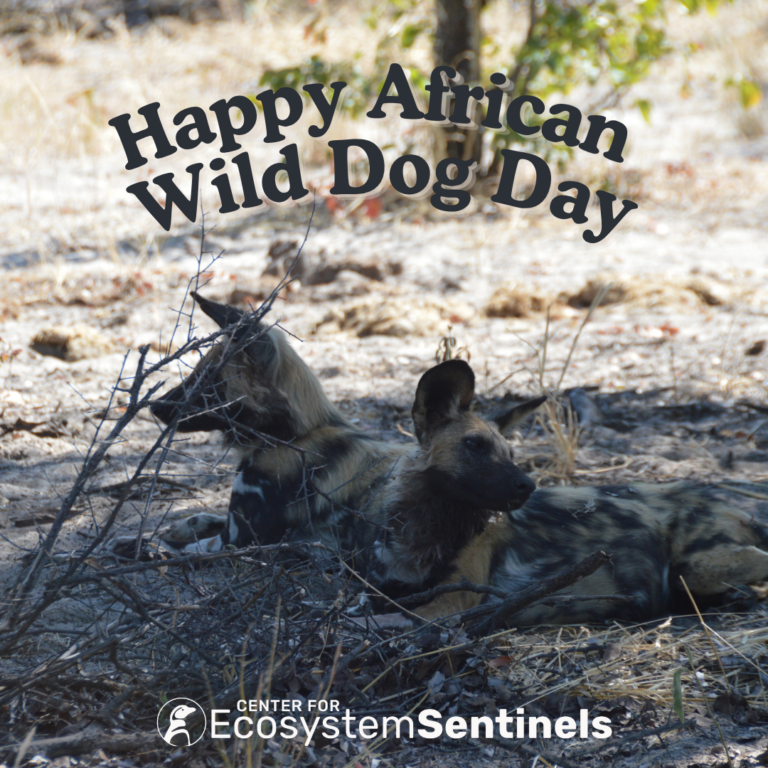
Happy World African Wild Dog Day! While most people know the Center for Ecosystem Sentinels for our work on penguins, we also research African Wild Dogs. In fact, Dr. Kasim Rafiq and graduate students Leigh West and Marie-Pier Poulin are just returning from Botswana right now! As usual, they worked alongside our collaborators from Botswana Predator Conservation over the summer.

WRF Symposium

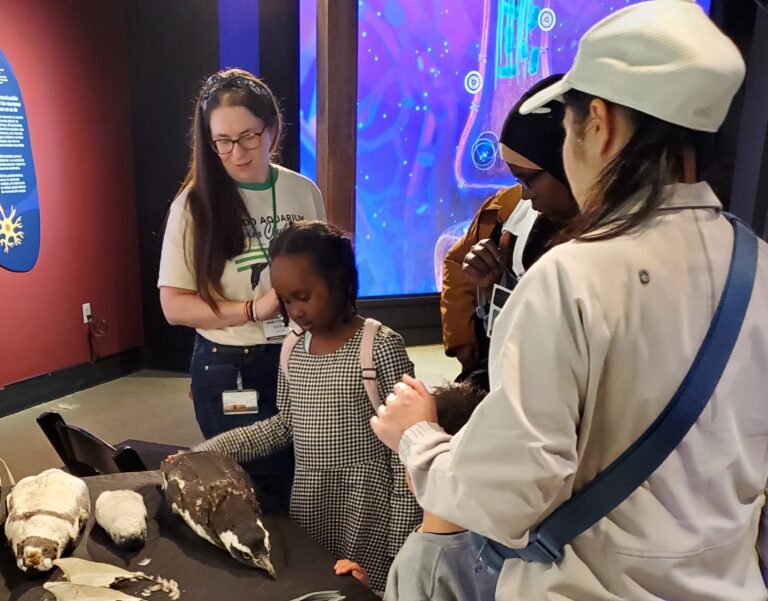
Dr. Kasim Rafiq recently presented his work on using animal-worn sensors to understand the impacts of environmental change on African wild dogs and lions at the Washington Research Foundation Symposium, who fund his position at the university. As part of this work, over the past two years, Kasim, Leigh West, and Dr. Briana Abrahms developed and deployed fitness trackers for

The value of field research in academia

Authors: Kasim Rafiq, Neil R. Jordan, J. Weldon McNutt, John Neelo, Nina Attias, Dee Boersma, Meredith S. Palmer, Jennifer Ruesink, and Briana AbrahmsJournal: ScienceDOI: https://www.science.org/doi/10.1126/science.ado6937 “By refining the academic system to recognize and support different forms of scientific inquiry equally, we can build the diverse research community necessary to empower discovery across disciplines.”

The capacity of sentinel species to detect changes

Full title: The capacity of sentinel species to detect changes in environmental conditions and ecosystem structureAuthors: T. J. Clark-Wolf, Katie A. Holt, Erik Johansson, Anna C. Nisi, Kasim Rafiq, Leigh West, P. Dee Boersma, Elliott L. Hazen, Sue E. Moore, Briana AbrahmsJournal: Journal of Applied EcologyDOI: 10.1111/1365-2664.14669 “A major obstacle to preventing and reversing biodiversity loss in the Anthropocene lies in the scarcity of tools and data for monitoring

Abrahms Lab featured in AppleTV’s “EarthSounds”

If you ever wondered how we use acoustic collars to gain insights into the daily lives of African wild dogs, watch the new nature documentary series EarthSounds on AppleTV! Dr. Briana Abrahms and postdoc Dr. Kasim Rafiq were scientific consultants on the show, while Dr. Rafiq’s and grad student Leigh West‘s research was featured in the episode “Listening to Our

Increasing ambient temperatures trigger shifts in activity patterns and temporal partitioning in a large carnivore guild

Authors: Kasim Rafiq, Neil R. Jordan, Krystyna Golabek, John W. McNutt, Alan Wilsonand, Briana AbrahmsJournal: Proceedings of the Royal Society: Biological SciencesDOI: https://doi.org/10.1098/rspb.2023.1938 Shifts in species’ interactions are implicated as an important proximate cause underpinning climate-change-related extinction. However, there is little empirical evidence on the pathways through which climate conditions, such as ambient temperature, impact community dynamics… Photo credit: Krystyna

Scroll to Top