Post written by Marie-Pier Poulin

Graduate student Marie-Pier Poulin scans for animal tracking collars in the Okavango Delta. Photo credit: Leigh West
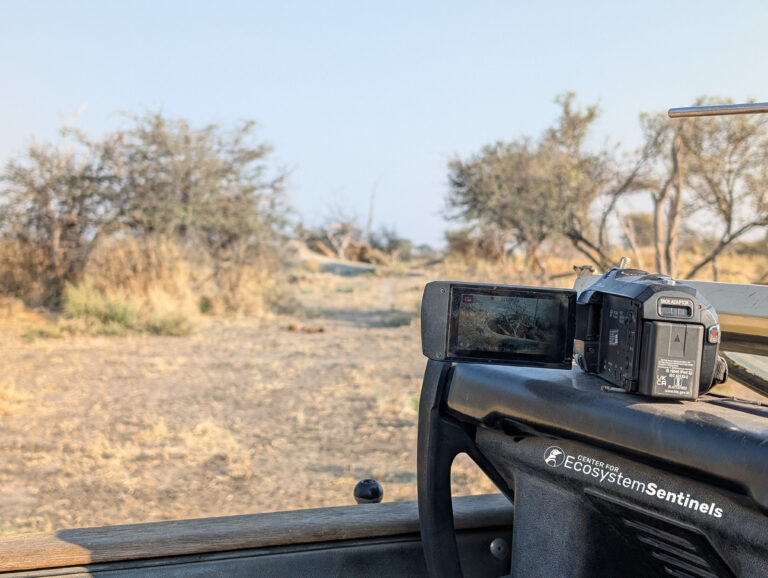
In mid-June, PhD candidate Leigh West, postdoctoral researcher Dr. Kasim Rafiq, and graduate student Marie-Pier Poulin arrived at Dog Camp, the Botswana-based bush camp of our long-term collaborators Wild Entrust’s Botswana Predator Conservation. Over the past month, we have been tracking and monitoring African wild dog packs fitted with animal-worn GPS and accelerometer collars. We’re also filming lions fitted with GPS collars to match observed behaviors—like resting, walking, or feeding—with acceleration data recorded by the collars. We’re using these data to train AI models to translate behavior signatures within the tracking collars that allow us to see what the animals are doing, even when we’re not with them. This information will help us glean how Africa’s changing climate affects carnivore behavior.
In collaboration with the Botswana Predator Conservation team, we have also been counting wild dog pups as they emerge from the den to track survival rates, and documenting all sightings of large carnivores—including identifying all individuals by their unique spot or whisker patterns—to contribute to the long-term monitoring of these species in the region.
A highlight of our field trip so far was seeing four cheetahs hunt a warthog. One male climbed on a termite mound, potentially to get a better view of the warthog, while the others remained nearby. Then, another cheetah circled around a second mound closer to the warthog and pushed it towards the others. They all took off in a chase. It was great to see them work together!

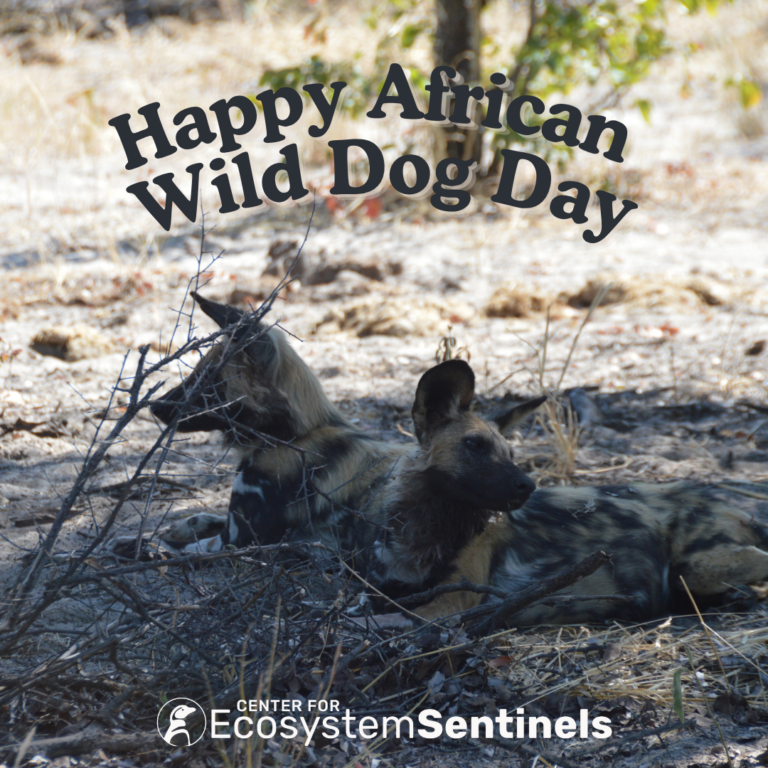
African wild dogs; photo credit Marie-Pier Poulin 
African wild dogs sleeping; photo credit Marie-Pier Poulin 
A lioness fitted with a GPS and accelerometer collar; photo credit Marie-Pier Poulin 
Leopard cubs in a tree; photo credit Marie-Pier Poulin 
Cheetahs resting in the shade; photo credit Marie-Pier Poulin 
A cheetah standing on a termite mound; photo credit Marie-Pier Poulin