lions

Field updates: Botswana, August-October 2025

Written by Dr. Kasim Rafiq and graduate student Marie-Pier Poulin of the Abrahms LabAll research and photographs are done in compliance with IACUC-approved protocols, and have been permitted through the appropriate permits. Over the past few months, we have been busy collecting data on African carnivores at Dog Camp, the Botswana-based bush camp of our long-term collaborators Wild Entrust’s Botswana […]

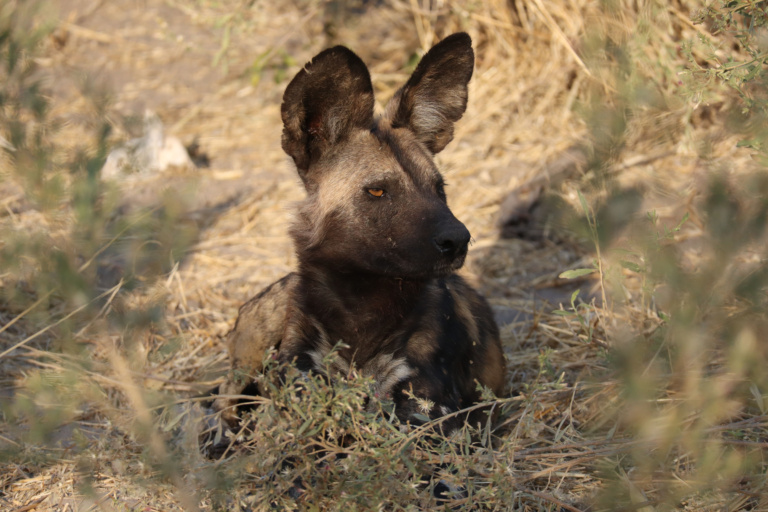
An African wild dog looks towards the camera through green leaves.

Wild canids and felids differ in their reliance on reused travel routeways

Dr. Briana Abrahms and Dr. Kasim Rafiq, along with many collaborators, published this study in PNAS earlier this fall. Animals move through their environments in many different ways, and these movement patterns affect things like hunting, finding mates, and spreading diseases. This study looked at GPS data from over 1,200 wild carnivores—16 canid (dog-like) and 18 felid (cat-like) species from

Field updates: Botswana, June – July 2025

Post written by Marie-Pier Poulin Graduate student Marie-Pier Poulin scans for animal tracking collars in the Okavango Delta. Photo credit: Leigh West In mid-June, PhD candidate Leigh West, postdoctoral researcher Dr. Kasim Rafiq, and graduate student Marie-Pier Poulin arrived at Dog Camp, the Botswana-based bush camp of our long-term collaborators Wild Entrust’s Botswana Predator Conservation. Over the past month, we

Intraguild competition mediates human avoidance in an endangered African large carnivore

Excerpt from the abstract: Here, we examined the spatial behaviour of two sympatric large carnivore species exhibiting intense intraguild competition—lions and African wild dogs—to investigate whether intraguild competition mediates large carnivore responses to human disturbance in support of the anthropogenic refuge hypothesis. We found that lions consistently avoided human-dominated areas. Similarly, we found that wild dogs generally avoided human-dominated areas,

Droughts reshape apex predator space use and intraguild overlap

From the Abstract:Droughts are increasing in frequency and severity globally due to climate change, leading to changes in resource availability that may have cascading effects on animal ecology. Although several studies have demonstrated the ecological impacts of drought, the behavioural responses of individuals that scale up to these broader-scale effects are not well known, particularly among animals in top trophic

Increasing ambient temperatures trigger shifts in activity patterns and temporal partitioning in a large carnivore guild

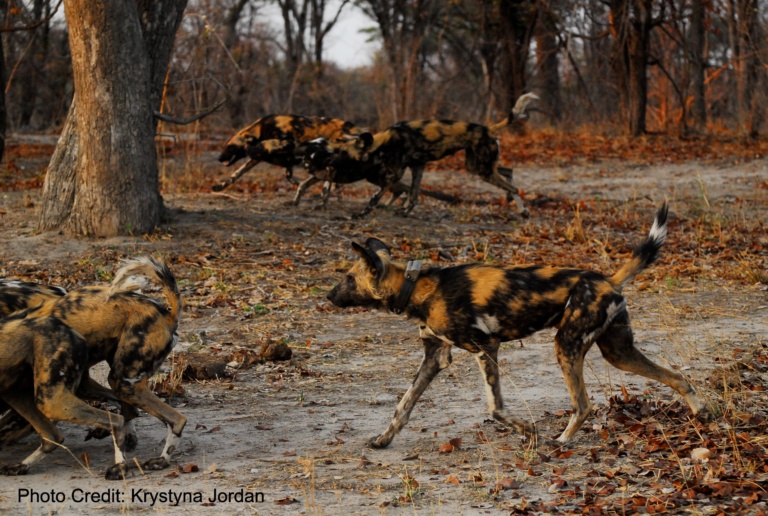
Authors: Kasim Rafiq, Neil R. Jordan, Krystyna Golabek, John W. McNutt, Alan Wilsonand, Briana AbrahmsJournal: Proceedings of the Royal Society: Biological SciencesDOI: https://doi.org/10.1098/rspb.2023.1938 Shifts in species’ interactions are implicated as an important proximate cause underpinning climate-change-related extinction. However, there is little empirical evidence on the pathways through which climate conditions, such as ambient temperature, impact community dynamics… Photo credit: Krystyna

Scroll to Top