Written by Dr. Kasim Rafiq and graduate student Marie-Pier Poulin of the Abrahms Lab
All research and photographs are done in compliance with IACUC-approved protocols, and have been permitted through the appropriate permits.

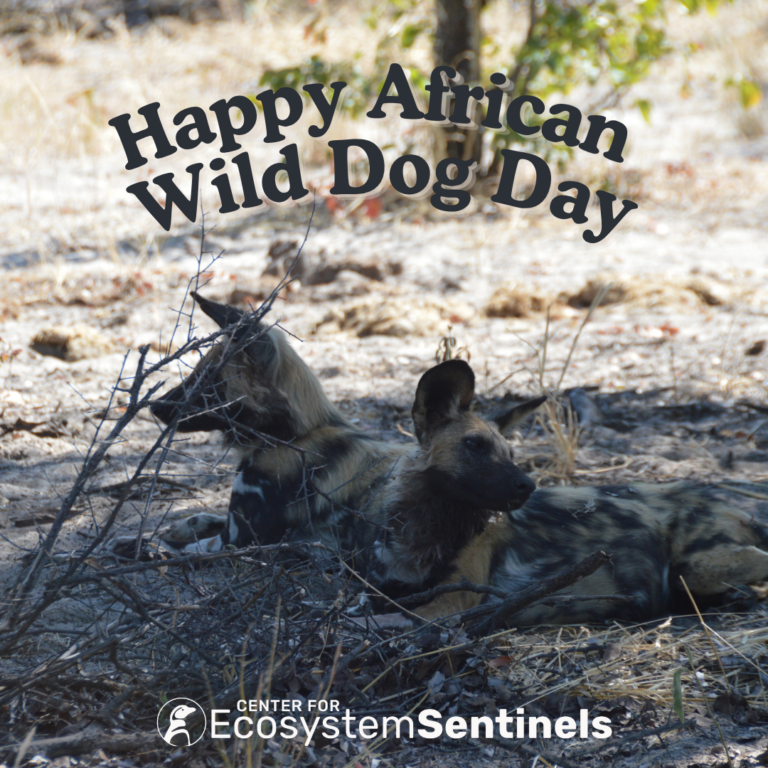
Over the past few months, we have been busy collecting data on African carnivores at Dog Camp, the Botswana-based bush camp of our long-term collaborators Wild Entrust’s Botswana Predator Conservation. During this time, we’ve been following wild dog pups as they grew up, became more adventurous, and eventually left their dens with the rest of the pack. We also photographed a new lion cub in one of the prides we monitor, and added its photos to our identification database. This allows us to track the cub as it ages, as each lion is identified by the unique pattern of their whisker spots—like a fingerprint.
Recording animals in the wild

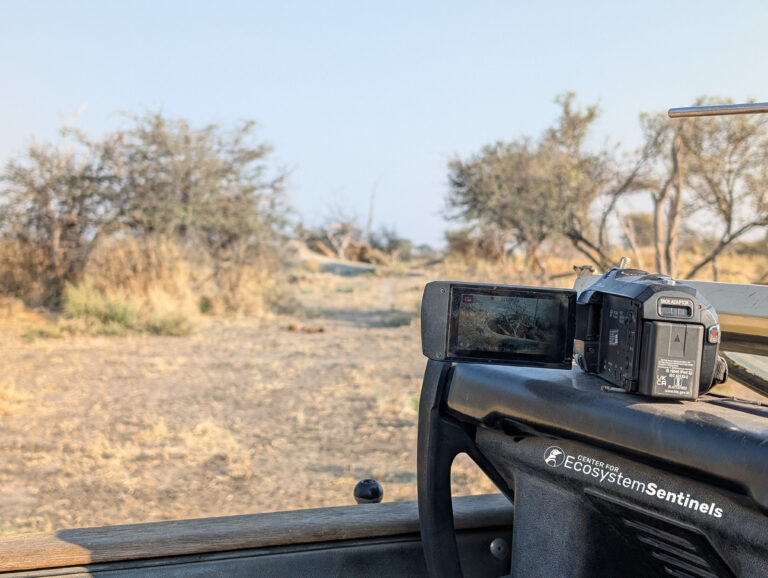
A big part of our work this season focused on filming African wild dogs and lions fitted with GPS collars to match their observed behaviors with the acceleration data recorded by the collars. These data help us train AI models to identify what the animals are doing—even when we’re not with them—to better understand how Africa’s changing climate affects their behavior*. One of the trickiest behaviors to capture on camera is feeding. Wild dogs can finish a meal in just a few minutes, and lions often hunt and feed at night. To improve our chances, we left camp early each morning to track the collared animals. With persistence (and a bit of luck!), we were able to record multiple feeding events for both species.
We watched wild dogs hunt and feed on impala, their preferred prey, and saw lions feeding on a variety of prey, from small species like impala and warthogs to larger ones like giraffes and buffalo. Spending so much time with these animals also gave us the chance to witness some incredible moments! One day, a collared lioness climbed a tree to steal an impala from a leopard family, while one leopard cub was still in the branches above. Another time, four lionesses and seven cubs successfully brought down a buffalo. We also saw those same cubs chasing a civet, a small cat-like carnivore, perhaps playing or practicing their hunting skills.
Our Botswana researchers tag animals too!

We also deployed new GPS tracking collars across both African wild dogs and lions. These collars collect GPS locations every 20 minutes to three hours, depending on the species, as well as other behavior data, and will allow us to continue monitoring our species’ movements and behaviors well into 2026.
Though our team is now back from the field, our long-term collaborators at Dog Camp will continue to monitor the study populations and maintain the collar data until our return next year. Our work would not be possible without them, and we are incredibly grateful to work with such an amazing team and organization.
* Read more about our innovative use of AI in the field of ecology in Dr. Rafiq’s 2024 paper, summarized here: Generative AI as a tool to accelerate the field of ecology