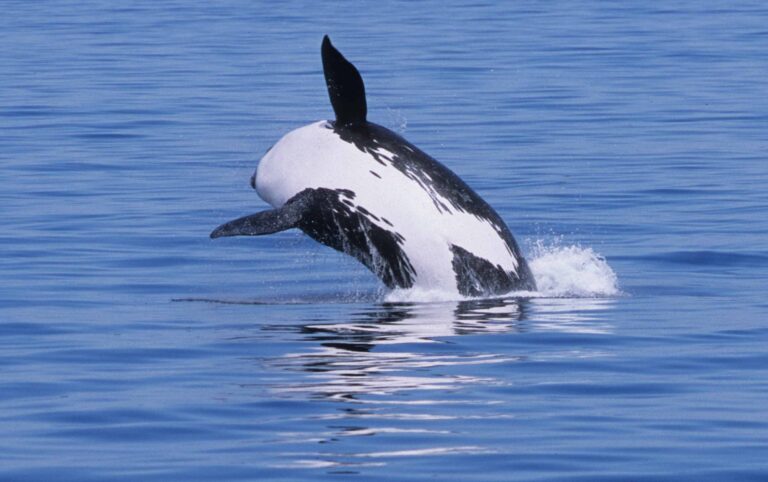
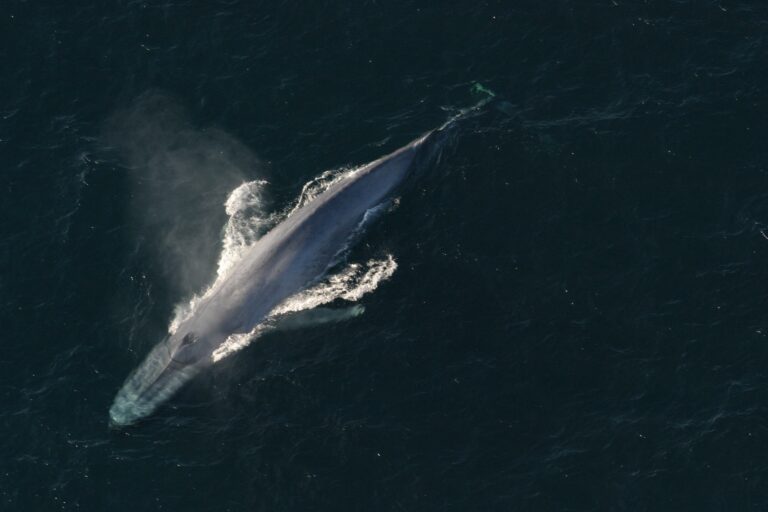
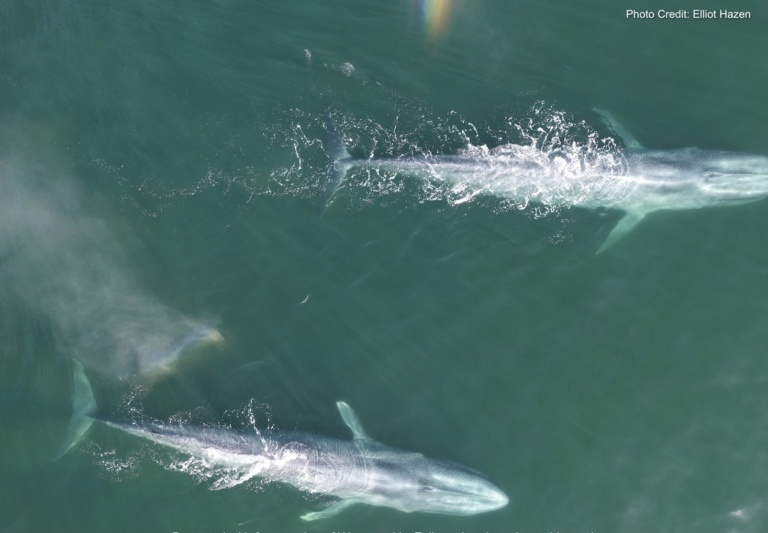
Gray whales in the eastern North Pacific have been shrinking in number for the past six years — and the decline seems to be getting worse. This is surprising because gray whales had made a big comeback after being hunted almost to extinction. But now, warming oceans are changing their Arctic feeding areas. Less sea ice and shifts in ocean currents are reducing the amount and quality of food available to gray whales. Scientists think the population drop may be the result of both the whales’ recovery reaching its limit and the growing effects of climate change on their environment.
Authors: Joshua D Stewart, Jacqueline M Grebmeier, M Tim Tinker, John Calambokidis, Sue E Moore
Journal: ICES Journal of Marine Science
DOI: 10.1093/icesjms/fsaf196
Press: Public News Service
Photo credit: A mother gray whale and calf spy-hopping. (Image credit: Dr. Steven Swartz / NOAA’s ArkWhales)