CES has an outreach-packed spring 2026
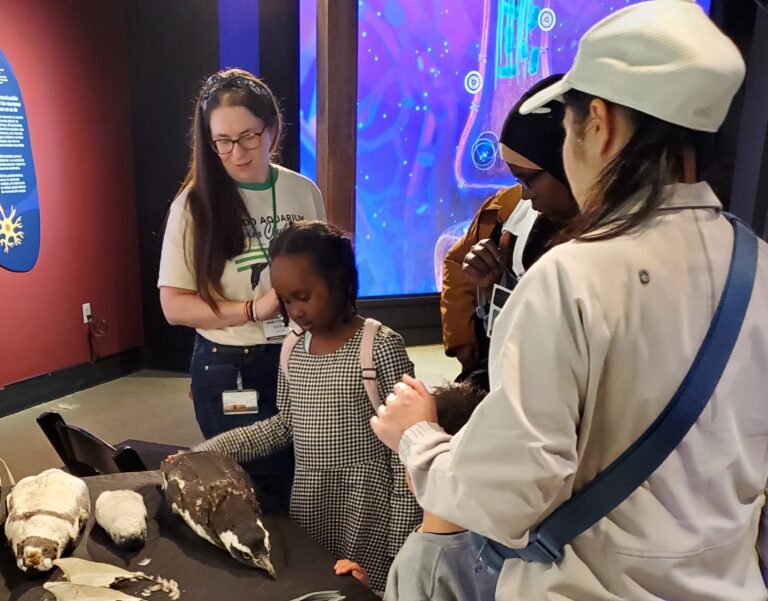
We’ve been presenting our research all around the region, and beyond! Make sure to stop by the BIOL 305 Film Showcase on June 10 to see the latest creations from Dee’s video students!
We’ve been presenting our research all around the region, and beyond! Make sure to stop by the BIOL 305 Film Showcase on June 10 to see the latest creations from Dee’s video students!
While we are known for our penguin research, there is another marine sentinel that the Center holds dear: whales. In fact, Dr. Sue Moore recently received the Kenneth S. Norris Lifetime Achievement Award from the Society for Marine Mammalogy, recognizing her outstanding career and lasting contributions to marine mammal science! It’s safe to say we know a thing or two
Dr. Sue E. Moore is the 2026 recipient of the Kenneth S. Norris Lifetime Achievement Award from the Society for Marine Mammalogy, recognizing her outstanding career and lasting contributions to marine mammal science. The Society for Marine Mammalogy established the Kenneth S. Norris Lifetime Achievement Award in honor of the Society’s founding President Dr. Kenneth S. Norris. The award recognizes
Join Dr. Dee Boersma, Dr. Sue Moore, and Dr. Nigella Hillgarth on a cruise to Baffin Island! This will be an expedition from Greenland to the Canadian Arctic and into the Northwest Passages, from September 1 – 18, 2026. Sail in the same waters as Roald Amundsen and his crew of six during their 1903-06 successful navigation of the Northwest
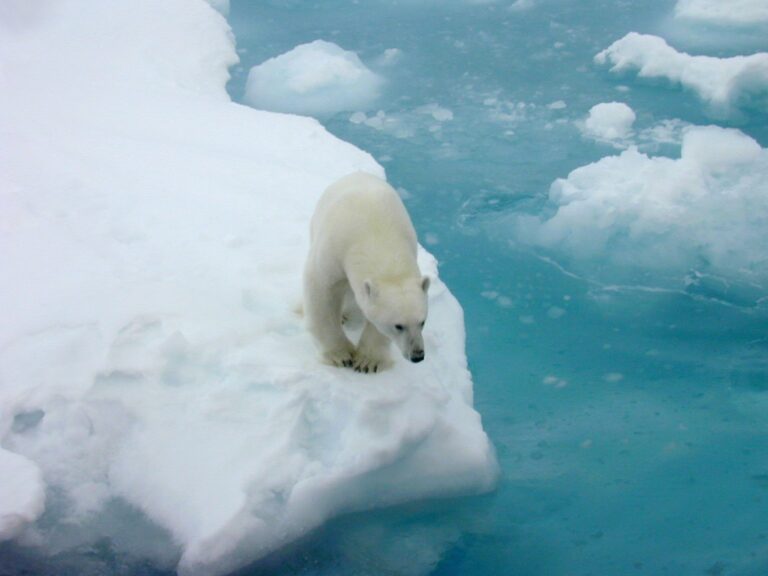
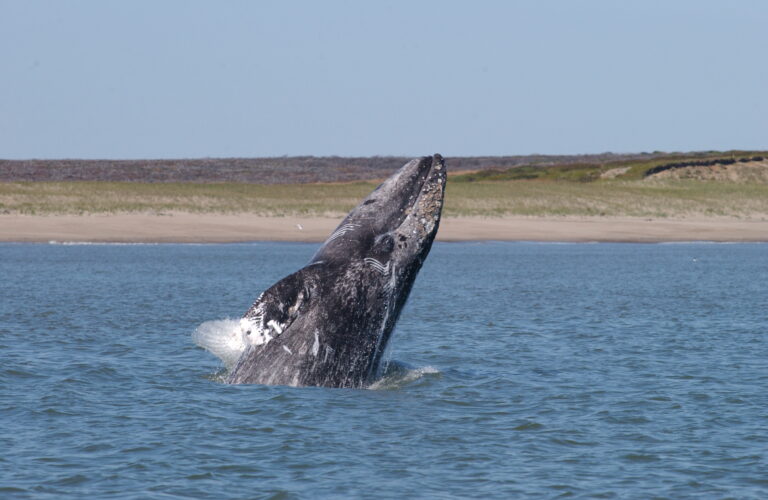
Gray whales in the eastern North Pacific have been shrinking in number for the past six years — and the decline seems to be getting worse. This is surprising because gray whales had made a big comeback after being hunted almost to extinction. But now, warming oceans are changing their Arctic feeding areas. Less sea ice and shifts in ocean
Dr. Sue Moore and Dr. Jennifer Tennessen attended One Ocean Week Seattle. This event is a region-wide, international gathering of ocean leaders, innovators, researchers, startups, policymakers, artists, educators, and communities to accelerate solutions for a sustainable, inclusive maritime future. Dr. Moore was a panelist on the “Coast to Coast Collaboration in Research” session held onboard the Statsraad Lehmkuh Tallship. She
Dr. Dee Boersma, Dr. Sue Moore, and Dr. Caroline Cappello were in the Galápagos from July 25 – August 3 to survey the penguins on the islands. They were able to measure 36 of them—16 more than last year! Measuring penguins is an essential part of our project, which is maintaining continuity with our decades-long dataset on the species. Dr. Boersma began studying
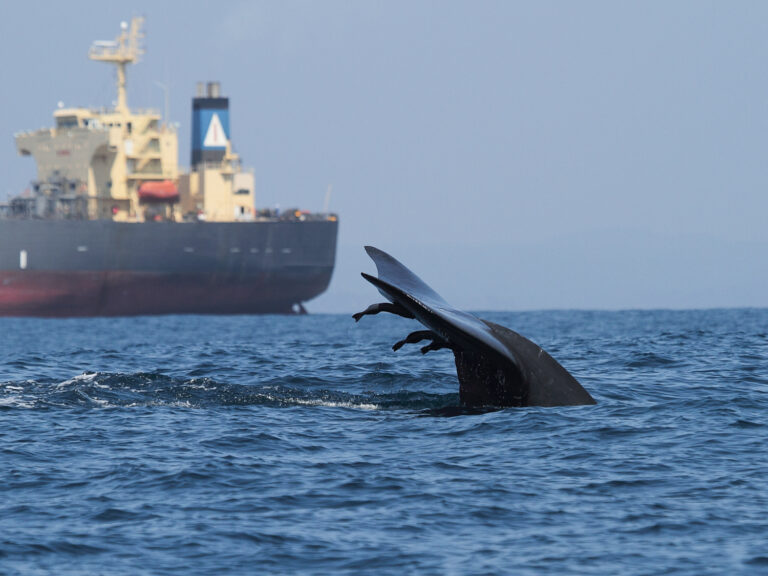
Excerpt from UW News: “Thousands of whales are injured or killed each year after being struck by ships, particularly the large container vessels that ferry 80% of the world’s traded goods across the oceans. Collisions are the leading cause of death worldwide for large whale species. Yet global data on ship strikes of whales are hard to come by —
Full title: The capacity of sentinel species to detect changes in environmental conditions and ecosystem structureAuthors: T. J. Clark-Wolf, Katie A. Holt, Erik Johansson, Anna C. Nisi, Kasim Rafiq, Leigh West, P. Dee Boersma, Elliott L. Hazen, Sue E. Moore, Briana AbrahmsJournal: Journal of Applied EcologyDOI: 10.1111/1365-2664.14669 “A major obstacle to preventing and reversing biodiversity loss in the Anthropocene lies in the scarcity of tools and data for monitoring
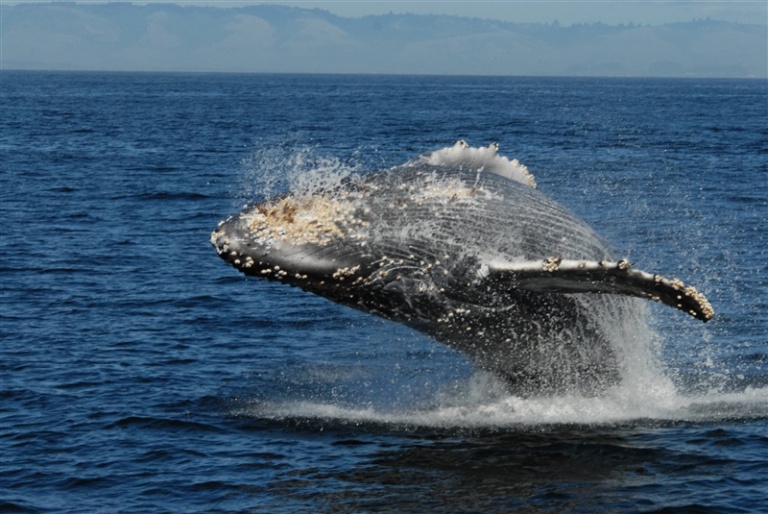
Excerpt: “Here we bring together sighting data from aerial and shipboard surveys in the southern and central Chukchi Sea, as well as recent sightings of humpback whales near Utqiagvik, Alaska to document these observations more fully. Authors: Kathleen M. Stafford, John C. George, Qaiyaan Harcharek, Sue E. MooreJournal: Marine Mammal ScienceDOI: https://doi.org/10.1111/mms.13051 Photo credit: Dr. Mridula Srinivasan NOAA/NMFS/OST/AMD [Humpback whale breaching. ]
Authors: Sue E MooreJournal: ICES Journal of Marine ScienceDOI: 0.1093/icesjms/fsad030 I describe my path through a series of opportunities that provided stepping stones from childhood years in the landlocked US Midwest to a 45-year-long career focused on cetacean behaviour and ecology…
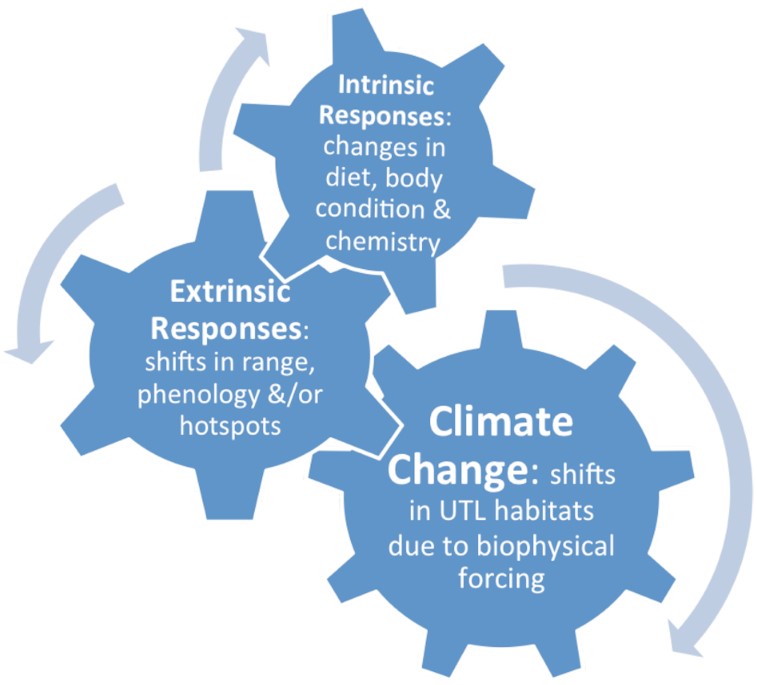
Scientists have found clear evidence that climate change is affecting marine mammals in U.S. waters, although few studies show direct impacts on population size or survival rates. Many of these effects were expected, but some sudden and unexpected changes have also occurred. Climate change often has stronger impacts when combined with natural ecological relationships, like predator–prey interactions, or with human
From the abstract: “We discuss potential impacts of observed and inferred prey shifts on gray whale nutrition in the context of an ongoing unusual gray whale mortality event. To conclude, we use the conceptual Arctic Marine Pulses (AMP) model to frame hypotheses that may guide future research on whales in the Pacific Arctic marine ecosystem.” Authors: Sue E. Moore, Janet
Quote from Abstract “We tested four predictions for central-place foragers provisioning offspring along a gradient in primary production spanning 1000 km of coastline in Argentina, using male Magellanic Penguins (Spheniscus magellanicus). Three of the predictions were supported. One prediction was not supported. Overall, penguin foraging patterns reflected patterns of oceanographic production, making them important sentinels of environmental variation.” Metadata Authors: