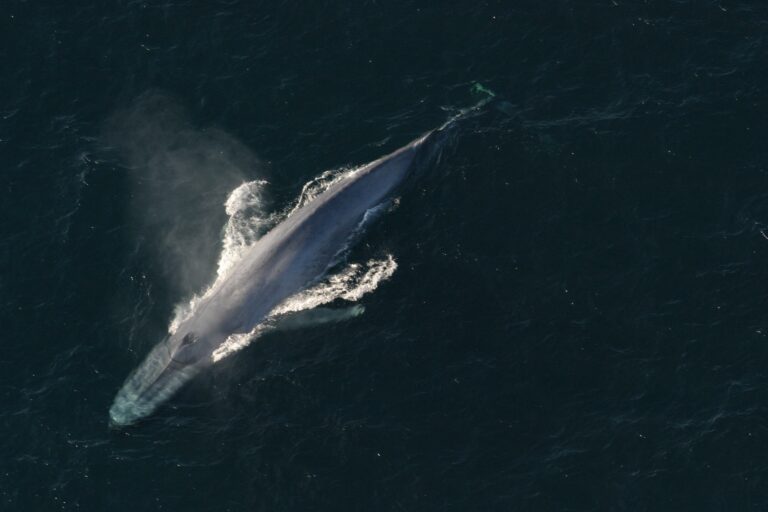
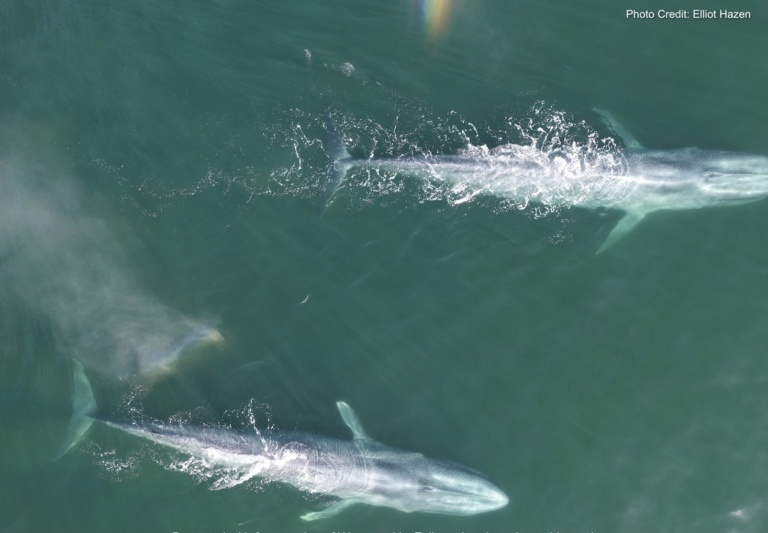
From the abstract: “We present a framework to facilitate climate change adaptation planning by identifying where highly migratory species habitats will persist (climate refugia), emerge (bright spots), disappear (dark spots), or remain unsuitable based on model analysis by 2100. When applied to eight species in the California Current System, we found that, on average, 37% of habitats are expected to be climate refugia, 9% are bright spots, and 13% are dark spots within National Marine Sanctuaries by 2100.”
Authors: Lezama-Ochoa, N., Welch, H., Brown, J.A., Benson, S.R., Forney, K.A., Abrahms, B., Buil, M.P., Jacox, M.G., Muhling, B.A., Liu, O.R., Clay, T.A., Freedman, R., Lipski, D., Bograd, S., Hazen, E.L., Brodie, S.npj Ocean Sustainability
Journal: journal’s name
DOI: 10.1038/s44183-025-00136-3
Photo credit: Dr. Elliott Hazen NMFS/SWFSC/ERD