CES Updates

Filter posts by category

Boersma Lab, News

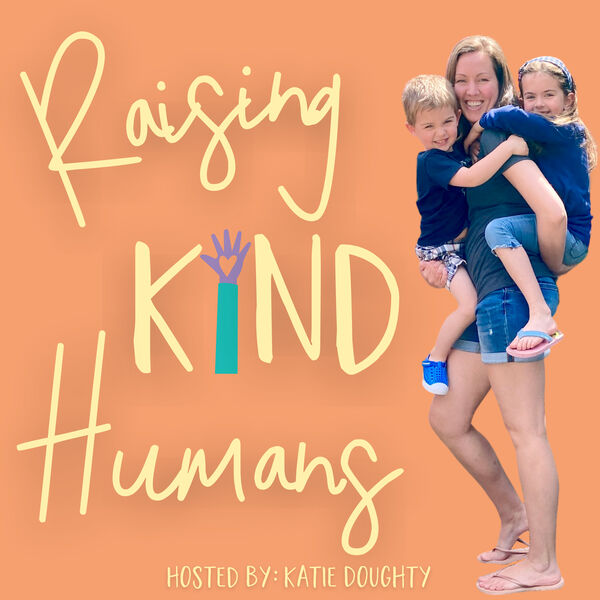
Dr. Eric Wagner featured on podcast Raising Kind Humans

Dr. Eric Wagner talked with Katie Doughty, host of the podcast Raising Kind Humans, about parenting, penguins, and protecting the planet. Find the link to the podcast below, or wherever you download your other podcasts. Raising Kind Humans, episode 56 Katie also wrote a couple of children’s books starring penguins. Follow Team Kind Humans on Instagram @katie_doughty

, , ,
Publications

Sex-specific migratory behavior in a marine predator results in higher risks to females

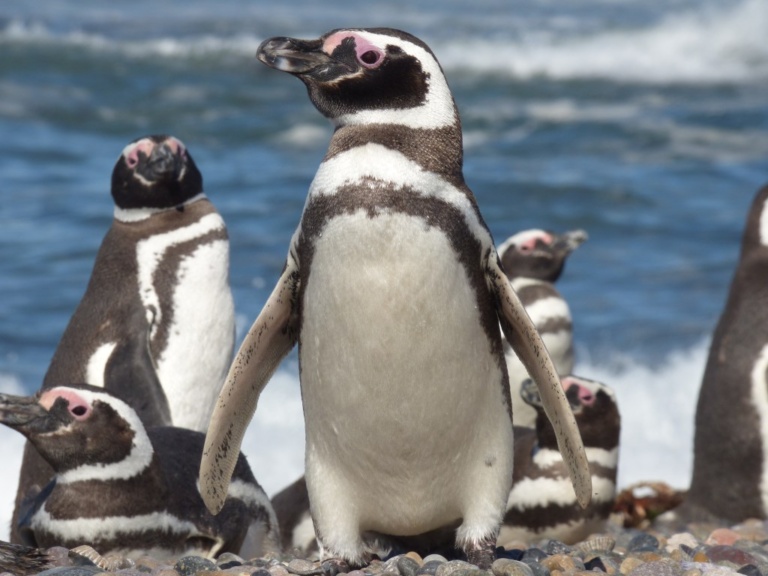
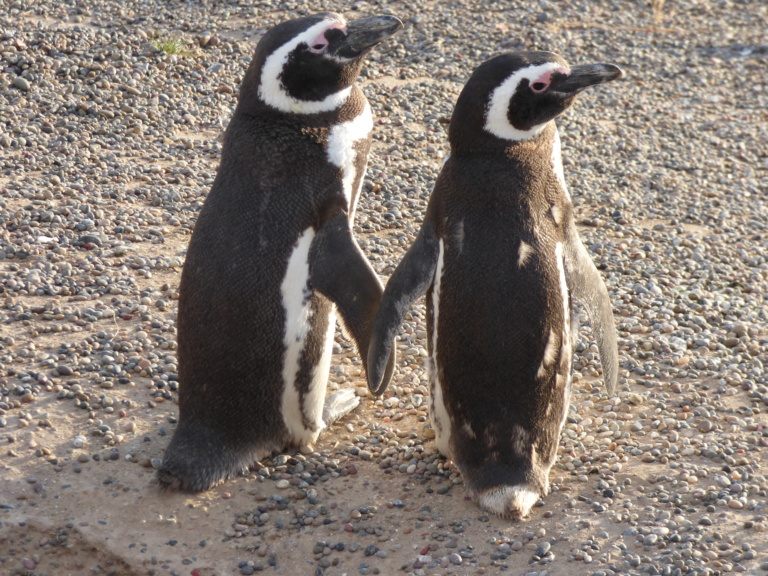
Protecting migratory animals is challenging because males and females can travel to different places at different times of the year. In this study, Dr. Ginger Rebstock and Dr. Dee Boersma tracked male and female Magellanic penguins during their migration and found that females stayed closer to shore and slightly farther north than males. Both sexes reached similar overall latitudes, but

, , , ,
Publications

Increasing ambient temperatures trigger shifts in activity patterns and temporal partitioning in a large carnivore guild

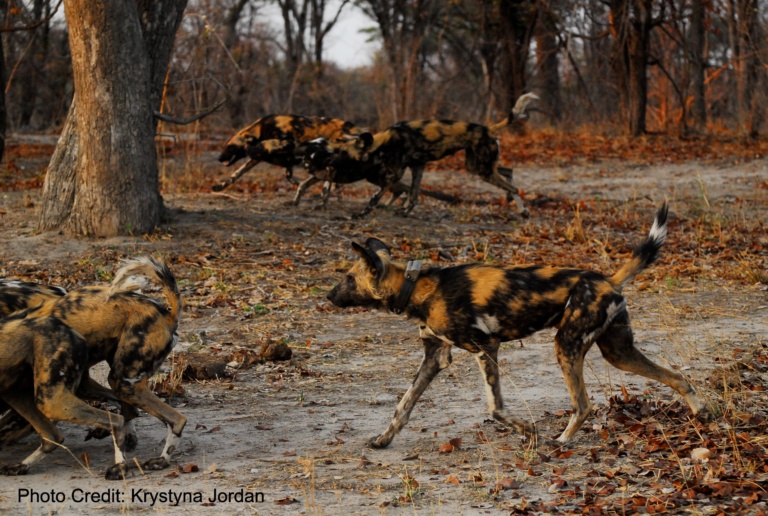
Authors: Kasim Rafiq, Neil R. Jordan, Krystyna Golabek, John W. McNutt, Alan Wilsonand, Briana AbrahmsJournal: Proceedings of the Royal Society: Biological SciencesDOI: https://doi.org/10.1098/rspb.2023.1938 Shifts in species’ interactions are implicated as an important proximate cause underpinning climate-change-related extinction. However, there is little empirical evidence on the pathways through which climate conditions, such as ambient temperature, impact community dynamics… Photo credit: Krystyna

, , , , ,
IMG_0574Abrahms Lab, News

Dr. Briana Abrahms chosen as a Packard Fellow for 2023

Dr. Briana Abrahms has been named a 2023 Packard Fellow for Science and Engineering. As one of 20 new fellows across the country, Abrahms, who holds the Boersma Endowed Chair in Natural History and Conservation, will receive $875,000 over five years for her research. Read the full story here. From all of us at the Center for Ecosystem Sentinels: congratulations

, ,
Boersma Lab, Updates from the Field

Field updates: Argentina, September 2023

Written by Dr. Dee Boersma The ongoing pinniped (seals and walruses) die-off on Peninsula Valdés is catastrophic. Our contacts in Argentina–two local veterinarians (Marci Uhart and Ralph Vanstreels), and Claudia Campagna of WCS–tell us that hundreds and potentially thousands of sea lions and elephant seals have died. Avian flu (more widely known as bird flu) has devastated seabird populations throughout

, , ,
Humpback whale in singing position. Photo credit NOAA / Dr. Louis M. HermanAbrahms Lab, News

Using the power of models to protect whales from possible ship-strikes

Written by Dr. Anna Nisi We have been building cutting-edge models of species distributions for four great whale species – blue, fin, sperm, and humpback whales. One key threat to the great whales is collisions with shipping vessels, and identifying places where ship-strike risk is high is essential for informing mitigation actions like vessel slow-downs. Our next step is to

, , ,
News

CES Open House: November 9, 2023

Our next open house will be November 9, 2023 from 4 p.m. to 6 p.m.! Meet the scientists dedicated to studying sentinel species, learn about their latest research, and find out what’s next for the Center for Ecosystem Sentinels. Find more information on our open house page. We hope to see you there!

,
Humpback whale breachingPublications

Humpback whale sightings in northern Arctic Alaska

Excerpt: “Here we bring together sighting data from aerial and shipboard surveys in the southern and central Chukchi Sea, as well as recent sightings of humpback whales near Utqiagvik, Alaska to document these observations more fully. Authors: Kathleen M. Stafford, John C. George, Qaiyaan Harcharek, Sue E. MooreJournal: Marine Mammal ScienceDOI: https://doi.org/10.1111/mms.13051 Photo credit: Dr. Mridula Srinivasan NOAA/NMFS/OST/AMD [Humpback whale breaching. ]

, ,
Abrahms Lab, News

Abrahms Lab featured on UW Homepage

The Abrahms Lab – Briana Abrahms, Biology assistant professor; Kasim Rafiq, Biology postdoctoral researcher; and Leigh West, Biology graduate student – was featured on the UW Homepage this week for their work studying the behavior of endangered African wild dogs in Botswana. Read the full article on the UW homepage. Congratulations, all!

Publications

Changing course: Relocating commercial tanker lanes significantly reduces threat of chronic oiling for a top marine predator

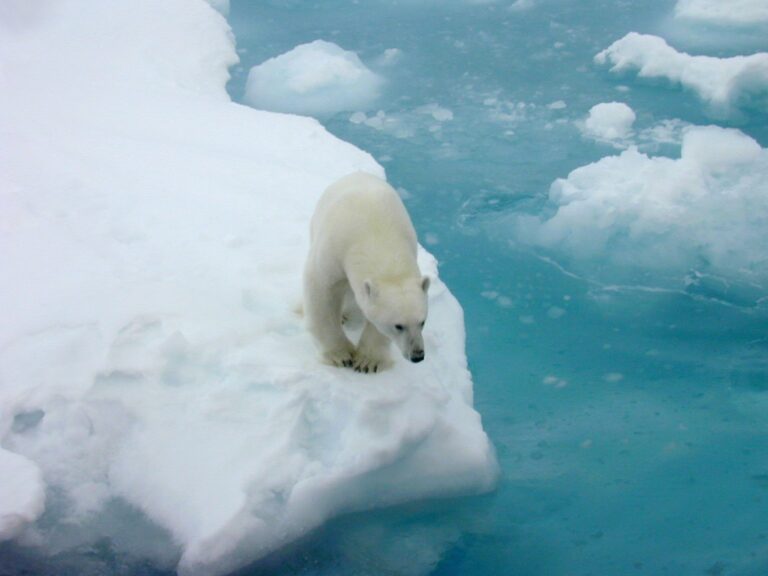
Authors: Eric L. Wagner, Esteban Frere, P. Dee BoersmaJournal: Marine Pollution BulletinDOI: 10.1016/j.marpolbul.2023.11 Photo credit: National Ocean Service Image Gallery Summary Written by Sofia Denkovski Argentinian oil and effects on seabirds Surveys from 1982-1990 suggested more than 40,000 penguins died per year in Chubut and Santa Cruz from chronic oiling. This was hypothesized to be due to the colonies’ proximity

, ,
Scroll to Top