Dr. Dee Boersma

Effects of age on Magellanic penguin telomeres

Full Title: Magellanic penguin telomeres do not shorten with age with increased reproductive effort, investment, and basal corticosterone From the Abstract: “All species should invest in systems that enhance longevity; however, a fundamental adult life-history trade-off exists between the metabolic resources allocated to maintenance and those allocated to reproduction. Long-lived species will invest more in reproduction than in somatic maintenance […]

Gal_adult_juvenile_feed_wm

First Observations of Post-Fledging Care in Galápagos Penguins

Until recently, species from all but three families of seabirds were known to give extended parental care, provisioning young after fledging. The exceptions were shearwaters, storm-petrels, and penguins. The Gentoo Penguin (Pygoscelis papua) is now known to feed its young after fledging. This paper adds the Galapagos Penguin (Spheniscus mendiculus) to the list, describing five instances of adult provisioning of

Natural selection on morphology varies among years and by sex in Magellanic Penguins (Spheniscus magellanicus)

Laura E. Koehn , Jeffrey J. Hard , Elaine P. Akst , and P. Dee BoersmaThe Auk 133(4):783-805. 2016.https://doi.org/10.1642/AUK-16-50.1 AbstractThe evolution of morphology in a population reflects several factors, including the influence of environmental variability on natural selection. We estimated natural selection on, and heritability of, 4 individual morphological traits (bill length, bill depth, flipper length, and foot length) and

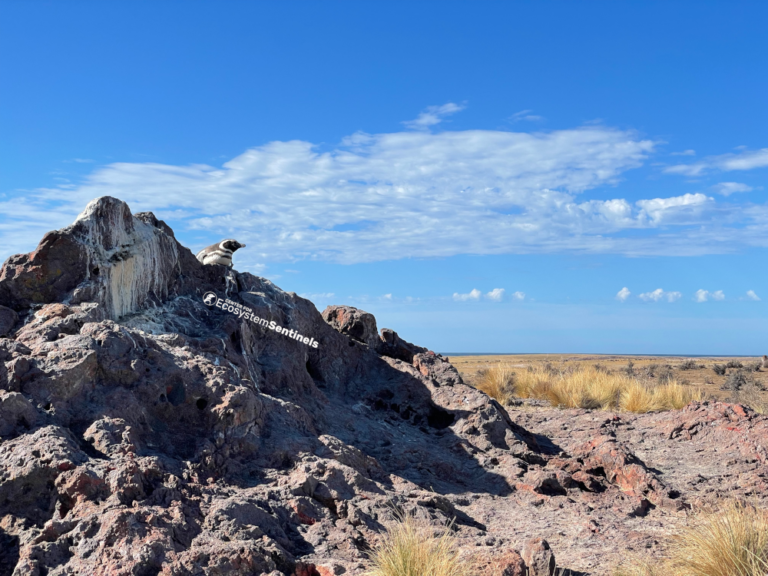
A penguin stands on a large rock with a blue sky as a backdrop.

Changes in habitat use and nesting density in a declining seabird colony

From the Abstract: “Seabirds in expanding colonies select the highest-quality nesting habitat, but habitat selection has seldom been studied in declining colonies. We studied a colony of Magellanic penguins (Spheniscus magellanicus) that declined from 314,000 active nests in 1987 to 201,000 in 2014. As expected, nest quality and reproductive success were higher in burrow habitats than in other habitats, and

A wet Magellanic chick stands in a flooded burrow.

Climate change and reproductive failure

Full Title: Climate change increases reproductive failure in Magellanic penguins Scientists studied nearly 3,500 Magellanic penguin chicks over 27 years to see how weather affected their survival. Starvation was the most common cause of death overall, but in two years heavy rain killed nearly half of all chicks. Predation and starvation happened every year, while storms caused deaths in about

Four small fish lay on a table.

The global contribution of forage fish to marine fisheries and ecosystems

From the abstract: “Forage fish use and value varied and exhibited patterns across latitudes and ecosystem types. Forage fish supported many kinds of predators, including fish, seabirds, marine mammals and squid. Overall, forage fish contribute a total of about $16.9 billion USD to global fisheries values annually, i.e. 20% of the global ex-vessel catch values of all marine fisheries combined.

Following the fish: penguins and productivity in the South Atlantic

Quote from Abstract “We tested four predictions for central-place foragers provisioning offspring along a gradient in primary production spanning 1000 km of coastline in Argentina, using male Magellanic Penguins (Spheniscus magellanicus). Three of the predictions were supported. One prediction was not supported. Overall, penguin foraging patterns reflected patterns of oceanographic production, making them important sentinels of environmental variation.” Metadata Authors:

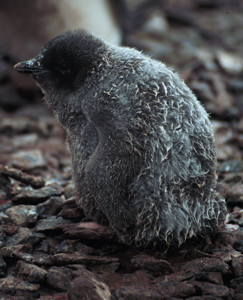
A small, wet penguin chick stands on rocky terrain.

Penguins as Marine Sentinels

This 2008 paper arghues that penguins are marine sentinels. The largest Magellanic penguin colony in Punta Tombo, Argentina, has declined by 22% since 1987. Although oil pollution used to be a major threat, changes in shipping routes have greatly reduced this problem. Today, penguins are swimming farther from their nests to find food, showing that climate change and fishing are

Scroll to Top