African wild dogs

Field updates: Botswana, summer 2023

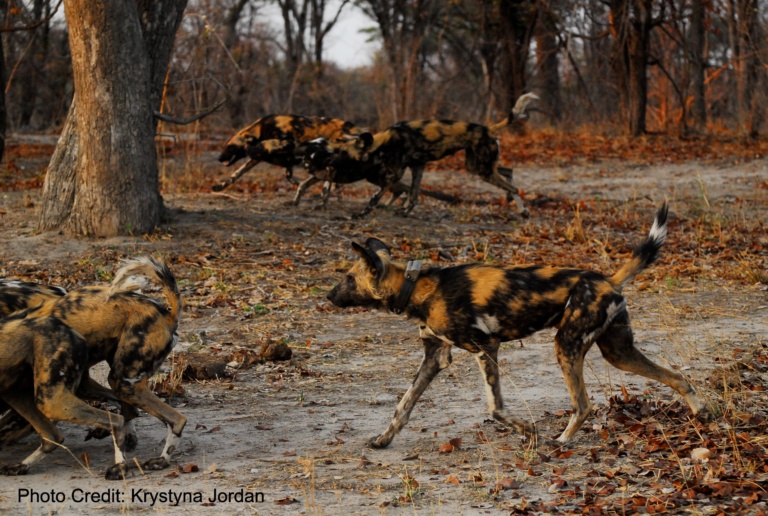
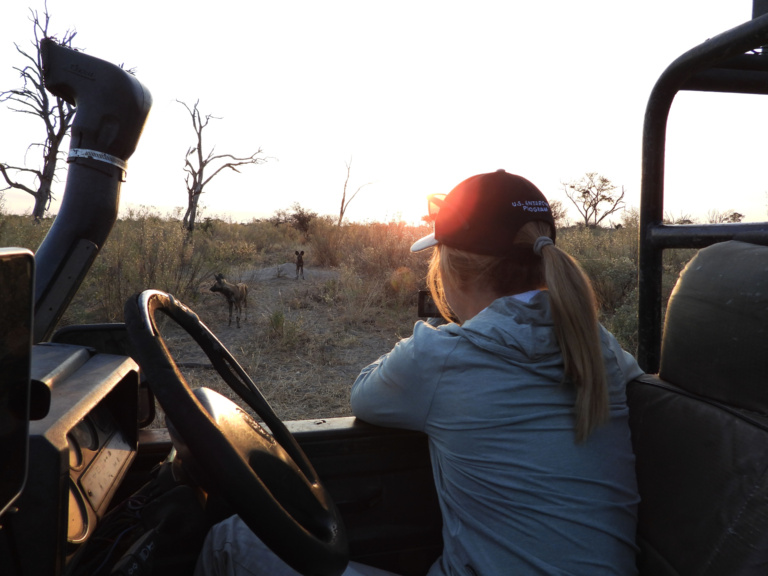
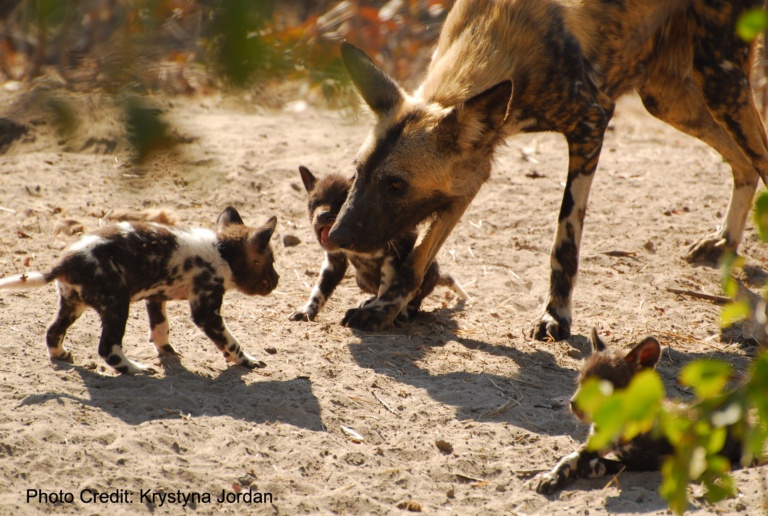
Written by Leigh West African wild dogs are very social animals, living in groups called packs. Wild dog packs have a dominant male and female, and it is this dominant pair that breeds each year to produce litters of pups. Packs of wild dogs are very cooperative, hunting and raising their young together. Two of the wild dogs that the […]

Field updates: Readying the 2023 season

After Assistant Professor of Biology and Boersma Endowed Chair Dr. Briana Abrahms and her team deployed GPS-audio wildlife tracking collars on African wild dogs and lions during the summer of 2022, Dr. Abrahms and Dr. Kasim Rafiq, a postdoc in the Abrahms Lab, have been working with industry collaborators to build AI models that detect behaviors (such as hunting) and hunger levels

Long-term, climate-driven phenological shift in a tropical large carnivore

Authors: Briana Abrahms, Kasim Rafiq, Neil R. Jordan, and J. W. McNuttJournal: Proceedings of the National Academy of SciencesDOI:10.1073/pnas.2121667119 Understanding the degree to which animals are shifting their phenology to track optimal conditions as the climate changes is essential to predicting ecological responses to global change…

A spatial capture–recapture model for group-living species

Authors: Robert L. Emmet, Ben C. Augustine, Briana Abrahms, Lindsey N. Rich, Beth GardnerJournal: EcologyDOI: https://doi.org/10.1002/ecy.3576 From the abstract: “Spatial capture–recapture (SCR) has been used to model both individual and group density in group-living species, but modeling either individual-level or group-level detection results in different biases due to common characteristics of group-living species, such as highly cohesive movement or variation in group size […]

Scroll to Top