
social ecology

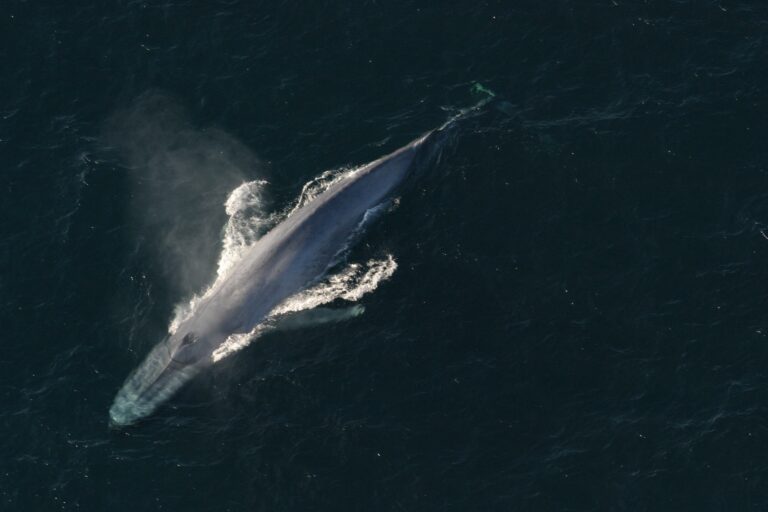
A photo of a blue whale surfacing in the open ocean, taken from above.Publications

Resource variability shapes the ecology of social information and collective sensing

Paper highlights: Social information enables organisms, from whales to bacteria, to expand their sensory capacity beyond that of a single individual. Understanding why such collective sensing evolves requires evaluating the ecological costs and benefits of using and producing social information. The value of social information for an individual consumer depends on how the resource varies in space, time, and abundance. […]
, ,
Publications

Anthropogenic impacts at the interface of animal spatial and social behaviour

From the abstract: “Here, we review studies of animal behaviour at the spatial–social interface to understand and predict how human disturbance affects animal movement, distribution and intraspecific interactions, with consequences for the conservation of populations and ecosystems. By understanding the spatial–social mechanisms linking human disturbance to conservation outcomes, we can better design management interventions to mitigate undesired consequences of disturbance.”

, ,
Scroll to Top