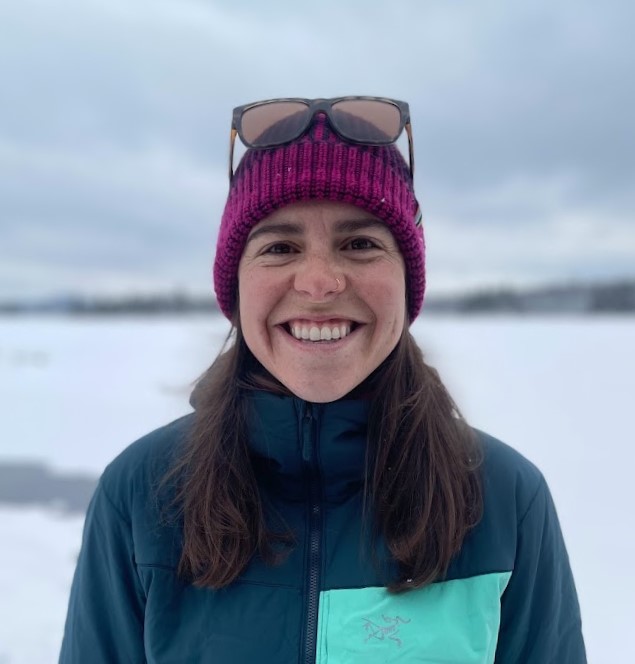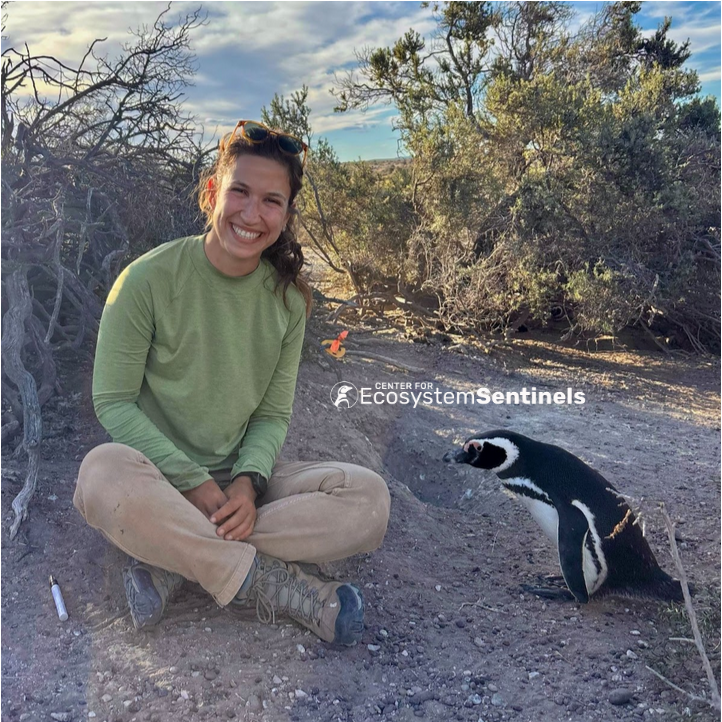
In honor of the upcoming holiday of World Penguin Day, let’s meet the latest graduate student in the Abrahms Lab studying penguins — Meredith Honig!
What inspired you to pursue graduate studies in ecology?
I have always enjoyed spending time outside and been curious about the living things around me. Growing up, my interest in animals and the outdoors led me to want to pursue a career in some sort of environmental field. During my undergraduate career, I majored in wildlife biology and had exposure to a myriad of graduate and faculty field biologists. After working a variety of jobs and internships, I found that I enjoyed the challenge of ecological research and decided to pursue a PhD.
Can you describe a moment during your Tombo field work trip that was particularly surprising or difficult?
Learning how to quickly and safely deploy biologgers onto penguins was definitely more difficult that I imagined. Essentially, we put tape under the penguin’s feathers and wrap it around a biologger on the penguin’s lower back. Doing so involved very nimble finger movements while holding penguin feathers up with a popsicle stick. After a couple deployments, my tagging speed drastically increased and tagging penguins is one of my favorite things to do at Tombo.

Describe a memorable field work moment, either from Tombo or from earlier field work.
In different parts of the colony at Tombo, we have nests that we study. We regularly check these nests to see which parent is home and if any eggs hatched. We also check nests to check on chicks and measurement their growth. My first year at Tombo, I witnessed one of my favorite chicks from a study nest fledging and touching the ocean for the very first time! It was heartwarming to see the chick swim for the very first time and do what penguins do best.
Are there any particular tools or applications you’ve found so far that you feel will be crucial for your research moving forward?
I am working with animal movement data and learning movement analysis techniques for the first time in my career. It is fun, interesting, and challenging and I hope to continue doing movement-related research throughout the duration of my career.