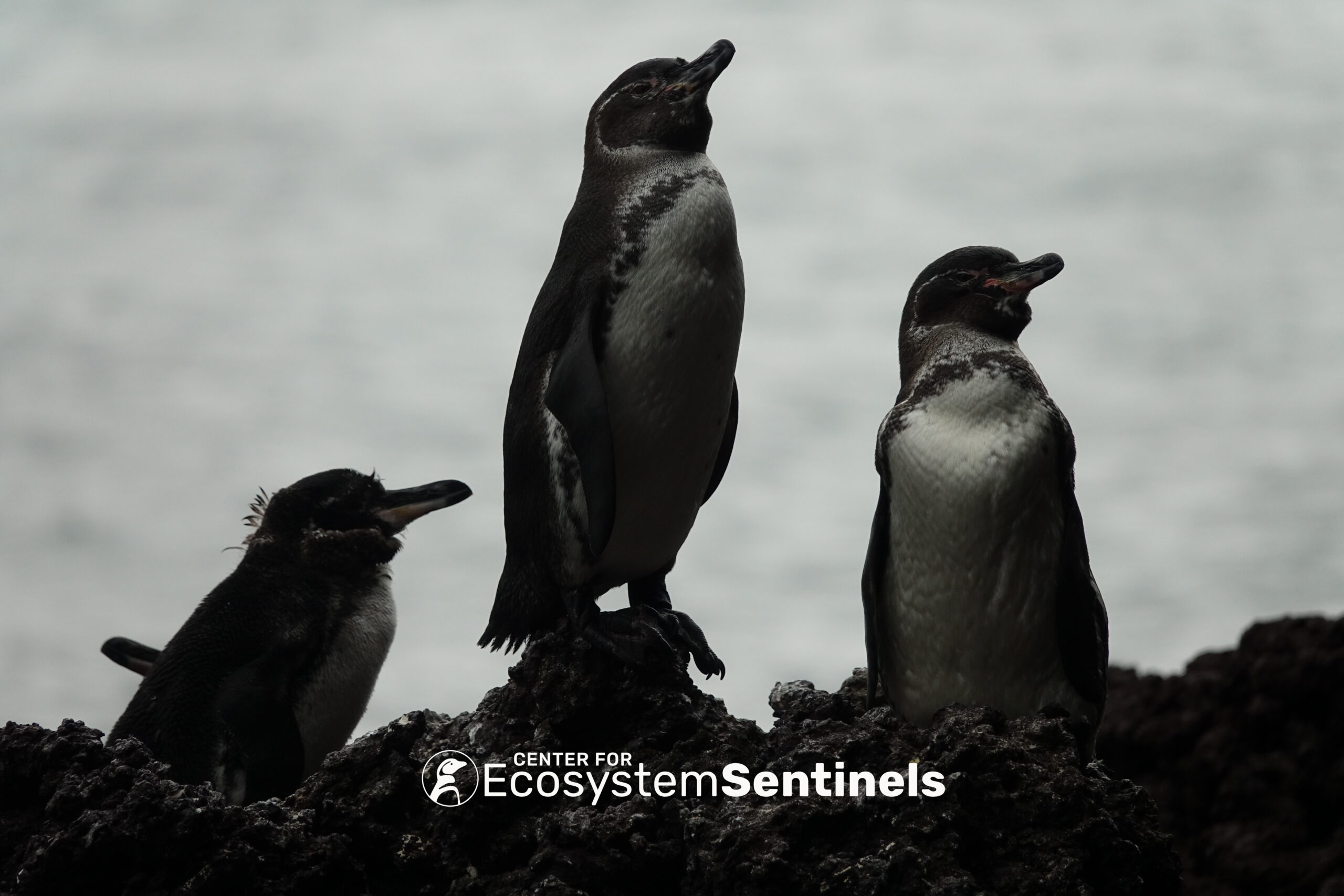
Accurate information about how penguin populations are changing is important for protecting them. However, it is difficult to count and monitor the four Spheniscus penguin species because they often nest in burrows and do not all breed at the same time. Different countries and research groups also use different survey methods, making it hard to compare data and identify real population trends. This can lead to uncertainty or conflicting conclusions about the status of some of the world’s most threatened seabirds, including Humboldt, African, Magellanic, and Galápagos penguins. The authors describe these challenges and suggest ways for researchers to work together using more consistent methods to improve conservation efforts.
Authors: Balza, U., Ampuero-Merino, L., Arce, P., Barham, P. J., Boersma, P. D., Cárdenas-Alayza, S., Daigre, M., Doig-Alba, L., Garcia-Borboroglu, P., Makhado, A., McGill, P. A., Pütz, K., Rodríguez-Planes, L., Simeone, A., Velez-Zuazo, X., Wagner, E., Zavalaga, C. B., & Raya-Rey, A.
Journal: Frontiers in Marine Science
DOI: 10.3389/fmars.2026.1819196
Photo credit: Godfrey Merlen, February 2019